How to Evaluate a Private Label Hoodie Manufacturer
- The real test of a private label hoodie manufacturer is not "can they make hoodies," but "who owns your pattern, your labels and your embroidery art, will your design leak to a competitor, and will reorders still match the first batch." On these three points, an ordinary contract factory and a private-label-friendly factory are worlds apart.
- Most quotes only show the "hoodie sewing fee," but in private label work the expensive part is invisible: pattern development, custom labels and embroidery, exclusivity terms, and reorder color matching. Ask about all of it, or the total price stays incomparable.
- For a buyer, the most useful screen is simple: ask "do my pattern and embroidery files belong to me, will you put exclusivity in writing, and how do you lock reorder color." That tells you more than "what is your lowest hoodie MOQ."
- Why private label hoodies deserve a separate screen
- A real cautionary case
- IP ownership: who keeps your private label hoodie pattern and tech files
- Exclusivity: will your design reach a competitor
- Labels, embroidery, print: private label hoodie capability
- Private label add-on fees: the hidden cost
- Reorder consistency: the lifeline of private label repeat
- Five dimensions, side by side
- A private label screen for buyers
Why private label hoodies deserve a separate screen
Hoodies are the friendliest entry point into private label: the construction is relatively simple, the minimum order is friendly, and new drops move fast, so a large share of growing DTC streetwear brands start with a hoodie line. But precisely because hoodies are "easy to make," many contract factories treat them as a standard commodity, and the boundaries a private label partnership needs, ownership, exclusivity, customization, get waved through with a casual "we can do all of that." Private label is not the same as "send us your artwork." With artwork-only production you buy capacity; with a private label partnership you buy an entire chain that carries your own name. Which parts of that chain belong to you, and which parts the factory can monetize a second time, decide how long your brand can last.
So we wrote this piece separately. It does not repeat the generic "how to pick a hoodie factory" screening, we already wrote that one as the hoodie manufacturer sourcing checklist. Instead it focuses on the traps unique to private label work: IP ownership, exclusivity, customization transparency, and reorder consistency. If those four points stay unclear, no matter how pretty the quote looks, it cannot save a brand whose differentiation just got copied.
A real cautionary case
A growing DTC streetwear brand launched its first private label hoodie line with a comprehensive contract factory that quoted very low. The factory verbally promised "the pattern is all yours" and said nothing about exclusivity. The first run of 800 sold well. When the brand went to reorder, it found a store with an almost identical style on the market, using the same pattern and the same embroidery placement, just a different label. On investigation, that contract factory had also supplied the "basic pattern" to another customer, because the contract only said "finished goods belong to the brand," not "the pattern and embroidery files are exclusively owned by the brand." The brand had no choice but to re-develop the pattern and re-sample, wasting a whole bestseller window plus a pile of avoidable after-sales and trust cost.
This case is not meant to dismiss comprehensive factories. It makes one point: the boundaries of a private label partnership must be written into the contract, on paper, not left to a verbal promise. The four points below are what turn that boundary into a clear set of questions.
IP ownership: who keeps your private label hoodie pattern and tech files
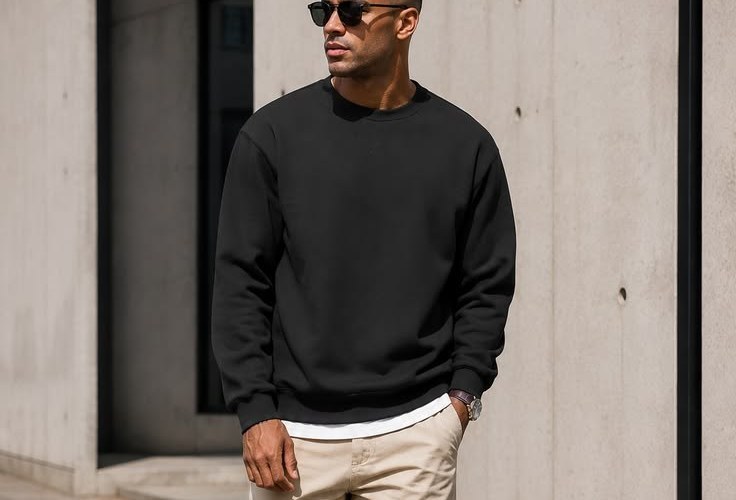
In a private label hoodie partnership, at least three things need their ownership clarified. First, the pattern file. Second, the embroidery and print artwork. Third, the tech pack. Many factories' habit is "you paid the development fee, the pattern is yours," but the embroidery artwork and tech pack are often kept at the factory by default, so when you switch factories next time, those have to be redone, which is an invisible repeat charge. For our private label clients, once the development fee is settled, all three are handed over to the brand and an IP ownership confirmation is signed. In one line: anything the contract does not say is "exclusively owned by the brand" is, by default, likely kept at the factory and open to second use.
Exclusivity: will your design reach a competitor
One step beyond ownership is exclusivity. Even if the pattern belongs to you, if the factory is also making similar-style hoodies for three other clients, your bestseller elements, pattern details, color pairing, embroidery placement, will easily "interbreed." When screening, ask directly: "for this category and this style, can you promise not to supply a direct competitor, and can it go in the contract?" A private label-friendly factory will usually agree to a limited exclusivity on specific SKUs. One that is vague and only says "we have many clients, no conflict" deserves a question mark. For a growing brand, exclusivity is not a "big-brand privilege," it is the basic protection that the differentiation you just built does not get copied immediately. On the full journey "from a sketch to the first sample," we also wrote a hands-on custom apparel manufacturer's 5-step OEM / ODM playbook you can cross-reference.
Labels, embroidery, print: private label hoodie capability
The soul of private label is "identifying yourself." A hoodie contract factory's private label capability shows in four things. First, can the main label and care label be made to your spec, including multi-language and compliant composition. Second, can embroidery and print reproduce your logo's precision, embroidery stitch density, print screen resolution. Third, can the packaging, polybag, hangtag, sticker, be customized. Fourth, are the minimums and surcharges for these custom items transparent. On our account-one hoodie line, the main label, care label, hangtag, embroidery and print are all customizable to the client's artwork, and the surcharge rules are listed separately on the quote, not buried until the end. What private label clients should fear most is "they do the labels too, but each one carries a vague extra fee nobody explained."
One more reminder: customization strength is not the same as "factory size." A mid-size factory that only runs hoodies is often steadier than a comprehensive mega-factory that takes every category, on embroidery precision and label lead time, because it runs those every single day. This is the same logic as "a factory that specializes in outerwear understands the craft better," which we expanded on in this outerwear specialist vs general factory piece.
Private label add-on fees: the hidden cost
The real cost of a private label hoodie is rarely on the "sewing fee" line. Common invisible items: pattern development fee, one-time, but some factories also charge a separate "pattern maintenance"; dedicated hangtag and embroidery plate fees; small-batch customization surcharge, extra per piece below a certain volume; reorder color-matching fee; packaging customization fee. The worst trap is "charged separately by color and by label" but not stated in the first quote. For a buyer, the move is: have the factory break out "every private label item" so the comparison is fair, factory A has a low sewing fee but charges for every private label item, factory B bundles it, looking only at the sewing fee misleads. On our account-one private label hoodies, the development fee, plate fee and customization surcharge are listed once and clearly in the sampling quote, MOQ starts at 100 pieces, sampling takes 7 to 10 days.
Practical note: when you get a sampling quote, do not stare at the sewing fee line first. Flip straight to the "other fees / plate / customization" items. If none are listed, or it vaguely says "see contract," that is a red flag, because the traps of private label work are almost all hidden here, not in the visible sewing fee.
Reorder consistency: the lifeline of private label repeat
Private label is not a one-shot deal; repeat purchase depends on "batch two matching batch one exactly." The three places a hoodie drifts most easily: fabric weight, same name, different batch, a few grams off changes the hand feel; base color dye-lot, same Pantone number, different dye vat, shifts; embroidery and print placement and density. When screening, ask the factory: "how do you lock this batch's parameters on reorder, do you have a retained-sample and retained-dye-lot system?" A factory with retained samples and dye lots keeps reorder color under control; one without means you re-confirm every batch, and your bestseller rhythm gets interrupted. On our account-one hoodie line we retain dye lots and samples for stock fabrics, reorders prioritize the same-batch remainder, and our AQL 1.5 eight-step inspection includes color and density checks, so repeat purchase stays stable.
Five dimensions, side by side
The table below lays out the difference between a "private label-friendly factory" and "ordinary contract production" on exactly this question. We are not saying ordinary contract production cannot do private label, we are saying when your brand lives on differentiation, the gap on these items is real:
| Dimension | Private label-friendly factory | Ordinary contract production |
|---|---|---|
| IP handover | Pattern, embroidery art, tech pack all handed over after settlement, with ownership confirmation signed | Often kept at factory by default, open to second use |
| Exclusivity | Limited exclusivity on specific SKUs, written into contract | Often vague, not in contract |
| Customization transparency | Main label, care label, hangtag, embroidery, print surcharges listed separately | Often "extra charge" disclosed late |
| Reorder consistency | Retained samples and dye lots, parameters locked, color controlled | Re-confirm every batch, easy to drift |
| Total private label price | Development, plate, customization listed once, comparable | Low sewing fee but many invisible items, hard to compare |
A private label screen for buyers
Next time you look for a private label hoodie manufacturer, ask down this list. Whether the other side is serious about private label or just taking it on the side shows in minutes:
Our account-one hoodie line and outerwear line run under one management, so we can lay out all five points above for you one by one, ownership handover confirmation, negotiable limited exclusivity, separately listed transparent customization surcharges, and a retained-sample retained-dye-lot reorder system, all stand up to questioning. Send us your hoodie design artwork and we can first give you a private-label-perspective assessment of ownership, exclusivity, customization and pricing, before you decide whether to develop the pattern.
Common Questions
Is the MOQ for private label hoodies higher than ordinary production?
Usually a bit higher, because the custom items, labels, embroidery, have plate minimums. Our account-one MOQ is 100 pieces, and private label customization fits inside that threshold, so small-batch trial orders are accepted, provided your product plan is clear and you have a real production intent. Do not chase "low MOQ" at a factory that will not even put IP ownership in writing.
Is my embroidery artwork safe with the factory?
It depends on the contract. Always sign "embroidery art is exclusively owned by the brand, the factory may not reuse it or supply it to a third party," otherwise there is a risk of reuse or even leakage to a competitor. For our private label clients, the embroidery art is handed over together with the pattern after the development fee is settled, with an ownership confirmation signed.
Comprehensive mega-factory or hoodie-only factory, which for private label?
It depends on your private label maturity. Early stage, few SKUs, want fast validation, a hoodie-only factory is easier on customization response and reorder consistency. Very large volume and highly standardized, a comprehensive factory's scale efficiency also works. Our hoodie and outerwear lines share one management, so switching category does not mean switching factory, and your pattern and tech carry over.
What if I find color difference on reorder?
Choose a factory with a retained-dye-lot and retained-sample system, reorders prioritize the same-batch remainder; on arrival, inspect color and density by AQL 1.5. A factory without dye-lot retention means re-color-matching every batch, with higher time cost and return risk. Our account-one hoodie line retains dye lots and samples for stock fabrics precisely for reorder stability.
Can the private label development fee be refunded?
Most factories treat the development fee as a one-time cost, not refunded on reorder; the key is to see clearly in the sampling quote "what the development fee covers, what IP it delivers." Our development fee settles into handing over the pattern and embroidery art, and the fee structure is listed once on the quote, no hidden items.
About Us
We, Eation Outerwear, are an integrated manufacturing and trading garment manufacturer with one plant in Guangxi and one in Dongguan, with a combined area of about 20000 square meters and a monthly capacity of around 500000 pieces. Since 2014 we have run OEM / ODM and hold BSCI, GRS, ISO9001 and OEKO-TEX certifications. Two production lines cover hoodies, windbreakers, puffers, fleece and technical jackets. Our hoodie line supports full-chain private label customization of main label, care label, hangtag, embroidery and print, and the development fee, plate fee and customization surcharge are listed once in the sampling quote. The dual-plant layout means when one plant's schedule is tight, we can shift across plants so your hoodie order is not queuing for a production line. On the full journey "from a sketch to the first sample," we wrote a guide you can cross-reference: custom apparel manufacturer's 5-step OEM / ODM playbook. On how to pick a suitable hoodie factory, we also wrote a separate hoodie manufacturer sourcing checklist.
Before you brief a factory, it helps to know what sampling runs you. Our guide on outerwear sampling cost breaks down sample fees by category and the hidden items to watch.