Outerwear Factory vs. General Apparel Factory
- Choosing an outerwear manufacturer is less about "can they make it" and more about "is outerwear their core business." A factory that only builds outer layers usually beats a general apparel maker on the outerwear-specific processes: seam sealing, down filling, and waterproofing.
- A general factory can produce a jacket, but outerwear is usually a side line there. Equipment, pattern makers, and QC standards are tuned for general garments, so seam leaks and uneven down distribution take longer to catch and fix.
- The most practical screening question for a buyer is not "can you make a windbreaker" but "how many hundred thousand outerwear pieces do you ship a year, and how many seam-sealing and down-filling machines do you run."
Why this deserves its own article
We work with a lot of growing DTC streetwear brands, and the first question they ask a factory is usually "can you make a windbreaker / a puffer." That question sets the bar far too low. Many factories can produce one sample jacket; far fewer can reliably ship ten thousand seam-sealed windbreakers that do not leak and down jackets that do not shift their fill.
Outerwear and basic styles like T-shirts or hoodies are not in the same league of manufacturing difficulty. A softshell or a windbreaker involves seam sealing, waterproof zippers, multi-layer lamination, quilting stitch density, and down-fill uniformity. If any one of those slips, the garment leaks, loses fill, or debonds in use. None of that is solved by "sewing a few more stitches." It needs dedicated equipment, dedicated pattern makers, and a QC flow built for outerwear. So whether a factory "specializes in outerwear" versus "makes outerwear on the side" often shows up as a large gap in the delivered result.
A real pitfall case
A growing DTC streetwear brand launching its first winter line went with a general large factory that takes all categories, hoping to keep things simple. The quote came in noticeably lower than a dedicated outerwear maker, and the factory readily promised "we have made windbreakers before." When the first batch arrived at the warehouse, customers reported shoulder seams leaking in rain and hem seam tape peeling at the edges. The root cause: the seam-sealing temperature curve had not been tuned for the windbreaker fabric; it was reused from their standard jacket settings. The down-filled styles were not even their order, but the skilled sealing hands on that line had been pulled to chase their high-volume general styles.
The brand ended up returning about a third of the goods, then went to a dedicated outerwear maker to re-develop the sample and recover. The whole detour cost nearly two extra months and a售后 (after-sales) bill that was easy to avoid. This case is not meant to dismiss general factories. It shows that when your product is "outerwear that lives or dies on its process," the factory's "fit with your product" matters more than its name or size.
What a dedicated outerwear factory specializes in
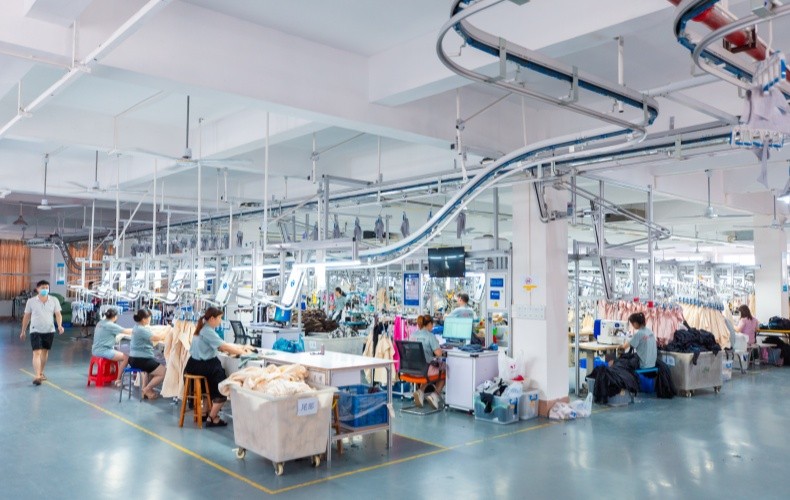
"Specializing" is not a slogan. It lands in four concrete places. Our own two lines (Guangxi and Dongguan) build only outer layers, and the four points below are what we run daily. They also happen to be the exact points to check against a general factory:
Equipment: seam-sealing, down-filling, and quilting machines are the hard gate
A windbreaker's waterproofing comes from seam sealing, not from the stitching itself. The sealing machine must tune temperature, speed, and roller pressure to the fabric; miss it by a degree and you get a false bond that looks sealed but opens after two washes. A down jacket's filling machine must control gram weight per baffle, or it looks "fat on one side, thin on the other" after a few wears. General factories are not without this equipment, but they often have only one or two units parked inside a general line. A dedicated outerwear maker runs seam sealing and down filling as main lines, with operators tuning and watching them every day, and a parameter library built from experience.
Pattern makers: people who only draw outerwear understand its temperament
The hard part of outerwear pattern making is 3D cutting and functional structure: how a hood sheds wind without scooping water, how underarm vents open for breathability, how a hem drawcord stays put. A pattern maker who draws T-shirts and hoodies all year will, on their first three-layer sealed windbreaker, easily trade off between mobility and waterproofing the wrong way. A dedicated outerwear maker's pattern library is years of outerwear blocks; change one point and the maker recalls which batch had trouble there last season.
Fabric and trim library: focused on outer-layer fabrics, not stocking unrelated categories
To serve all categories, a general factory spreads its fabric library wide but shallow on any single point. A dedicated outerwear maker concentrates its library on nylon, polyester, laminates, and fleece, with long-term comparative data on which mill's membrane is stable and which zipper's slide feel holds up. This means two things: first, fabric recommendations are more accurate and never "approximated" to fill an order; second, sampling can pull from a stocked library immediately instead of waiting half a month for materials to drift in for one sample.
Quality control: checkpoints built for outerwear's specific pain points
General garment QC centers on pressing, loose threads, and measurements. Outerwear QC centers on seam-tape integrity, stitch density, down-fill uniformity, and waterproof testing. A dedicated outerwear maker builds "pass the seam-tape check" and "spray-test for waterproofing" into the standard flow rather than waiting for a customer complaint to trigger an inspection. This is why we say evaluating an outerwear manufacturer should look at whether those items sit in its QC card, not at how large its plant is.
Four blind spots of general factories
To be fair: general factories are efficient and price-competitive on basic styles. But when your product is outerwear, especially with waterproof, down, or lamination processes, these four blind spots bite most often:
- Diluted process skill: outerwear is only one of many categories there; the sealing operator may also run other lines, parameters are not fixed, and batch-to-batch variance is large.
- Equipment runs "part time": few seam-sealing and down-filling machines, scheduled behind everything else; when you need a rush, your outerwear sample waits at the back of the queue.
- Shallow pattern experience: the pattern maker draws a handful of windbreakers a year, so 3D structure and functional detail get discounted between "wearable" and "good to wear."
- General-standard QC: no dedicated checkpoints for seam sealing and waterproofing, so problems surface at your customer's hands and the rework cost lands on you.
Five dimensions compared
The table below lays the two types of factory side by side on outerwear. We are not saying a general factory cannot make outerwear; we are saying when the product lives on its process, the specialist's difference is real:
| Dimension | Dedicated outerwear factory | General apparel factory |
|---|---|---|
| Production equipment | Seam-sealing, down-filling, and quilting machines run as main lines with fixed parameters | General flatlock dominant; special equipment scarce and scheduled behind other work |
| Pattern-maker depth | Draws only outerwear; deep experience in 3D structure and functional detail | Serves all categories; few outerwear blocks drawn per year |
| Fabric and trim library | Focused on outer-layer and functional materials with long-term comparative data | Broad but shallow per point; often pushes "close substitutes" |
| QC focus | Seam-tape integrity, waterproof spray test, and down uniformity in the standard flow | Centers on pressing, threads, and measurements; outerwear-specific items run last |
| Sampling and scheduling | Faster sampling on similar outerwear; rush can shift onto the dedicated line | Outerwear samples often queue behind general high-volume accounts; timeline unstable |
When a general factory is enough
On the other hand, not every jacket must go to a specialist, and you should not pay a premium for "specialist" when it adds nothing. A general factory is fully capable, and need not be avoided, in these cases:
- Light outerwear with no waterproofing and no down: a single-layer windbreaker or thin padded jacket is close to a standard jacket in process, so the general factory has no weak point.
- Very large, simple orders: if you only need stable volume of a basic style and tolerate coarse process detail, the general factory's scale efficiency is the better deal.
- Early sample to validate the design: if you only want to confirm the design draft, a general factory can produce an initial sample too; just do not set your bulk expectation from that initial sample's quality.
In one line: the simpler the process and the closer to standard apparel, the more a general factory suffices; the more the product depends on seam sealing, down filling, and lamination, the more the specialist's difference is worth paying for. Choose the factory by "what this garment lives on," not by "whether it is called a jacket."
An on-site screening checklist for buyers
Next time you visit a factory, or do a video audit, run through the points below. Within minutes, whether they specialize or do it on the side becomes obvious:
Our own two lines build only outer layers, and we can open all five points above for you to inspect: output, machine count, QC card, fabric test data, and comparable blocks. They hold up under questioning. On the full path "from a sketch to the first sample," we also wrote a practical playbook you can cross-reference: From Sketch to First Sample: A Custom Apparel Manufacturer's 5-Step OEM / ODM Playbook.
Common questions
Is a dedicated outerwear factory always more expensive than a general one?
Not necessarily. On simple light jackets, the specialist may have no price edge. But on process styles with waterproofing, down, and lamination, the specialist's fixed equipment and lower rework rate often make the per-piece total more controllable. Cheap or not should be read from the full account including rework and after-sales, not from the first line of the quote.
I want to start with basic hoodies, then add outerwear. Who fits?
If you need both, the safest is a maker strong in both hoodies and light outerwear, not one that "does everything." Validate its basics and lead time on the hoodie line first, then check its hard conditions for seam sealing and down filling when you move to outerwear. Our account-one hoodie line and outerwear line share one management, so switching categories does not mean switching factories, and patterns and processes carry over.
A general factory says "we have made many windbreakers." How do I verify?
Do not take it verbally. Ask for real photos and process notes of windbreakers closest to your product from the last six months, ideally with a video of the seam-sealing and waterproof testing on site. A specialist usually cannot wait to show you, because it runs these every day; hedging or only offering stock images is a flag.
Will a specialist take a small-batch trial?
It depends on the factory's policy. Our account-one MOQ starts at 100 pieces, sampling takes 7–10 days, and small-batch trials for new customers are accepted, provided your product plan is clear and you have a real intent to scale. A specialist does not only take large orders; it cares more that "you are serious about building outerwear" than that you are here for one sample to toy with.
How do I judge whether a factory's fabric recommendation is sound?
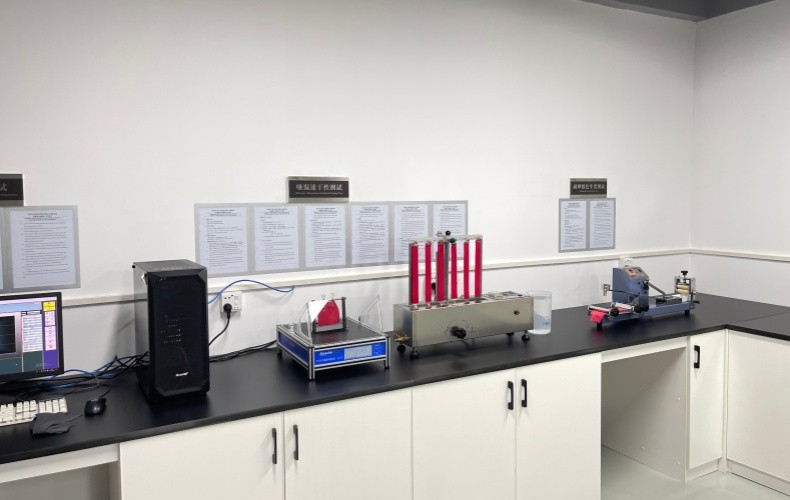
See whether it can show you measured waterproof, breathability, and gram-weight data instead of only quoting a supplier's spec code. A dedicated outerwear maker runs its own fabric lab or has a long-term testing channel and can produce numbers on the spot. Anyone who only says "this fabric is great" with no basis is often recommending to clear inventory rather than to serve you.
About us
We (Eation Outerwear) are a manufacturer-integrator focused on outerwear, with one factory in Guangxi and one in Dongguan, about 20,000 m² combined and a monthly capacity near 500,000 pieces. We have run OEM / ODM since 2014 and hold BSCI, GRS, ISO9001, and OEKO-TEX certifications. Both lines build only outer layers, hoodies, windbreakers, puffers, fleece, and utility jackets, with seam-sealing, down-filling, and quilting equipment run as main lines, and samples and bulk completed on the same production line. The two-factory layout also means that when one plant's schedule tightens, we can shift across plants so your outerwear order is not stuck waiting in a queue. On the full path "from a sketch to the first sample," we wrote a guide you can cross-reference: From Sketch to First Sample: A Custom Apparel Manufacturer's 5-Step OEM / ODM Playbook.