How a Puffer Jacket Manufacturer Verifies Fill Specs: A Spec-Sheet Audit Playbook
A printed fill-power number with no test method and lot number behind it is not a spec — it is a claim. This playbook shows how a puffer jacket manufacturer actually proves down fill specs, the five-step incoming-down verification we run on every lot, and the three documents you should demand before you pay.
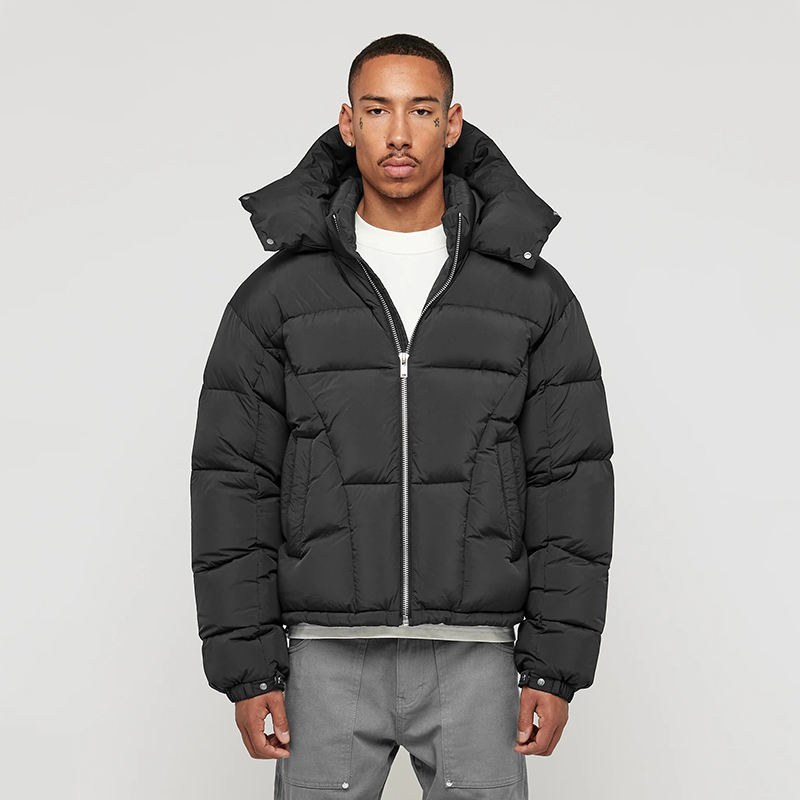
Down-filled outerwear lives or dies on three numbers: down content, fill weight and fill power. If you are still shortlisting a puffer jacket manufacturer, the sourcing questions matter — but once you have a shortlist, the real risk is not which numbers they print, it is whether those numbers are verified. Most buyers never find out they were wrong until a container arrives flat, cold and un-sellable. This article is the spec-sheet audit side of that decision: how the numbers get proven, what proof you are entitled to ask for, and the document-level red flags that separate a real spec from a decorated one.
A Buyer Burned by an Unverifiable "700 Fill Power" Label
A streetwear brand we later helped had taken delivery of 800 puffer jackets labeled "700 fill power goose down." The jackets felt flat and cold against the brief. The hangtag number had come from the fabric mill's supplier sticker — not from a test, not tied to a lot, and with no stated method. When the brand pushed back, there was no leverage: the purchase order had specified "700 fill power" as a word, never as a verified reading.
The cost was not only the 800 jackets. The drop had been marketed around "premium 700-fill down," so the mismatch hit the brand's credibility with its own customers, not just its margin. By the time they reached us, the only recovery path was a full re-fill of the next production run plus a rewritten PO that named the test method, the lot, and the acceptance tolerance up front.
A number on a hangtag is a marketing claim until a test method and a lot number sit behind it. Write the verification into the PO, not just the adjective.
How a Puffer Jacket Manufacturer Actually Measures Fill Power
Fill power is a volume, not a opinion. It is the number of cubic inches one ounce of down occupies inside a standard cylindrical cage, measured by the IDFL or EN 12130 method. A credible puffer jacket manufacturer does not eyeball it — the cage test is run on a sample drawn from the actual lot, and the reading is logged with a photo of the test.
That last part is the gap most buyers miss. A "700" with no stated method (IDFL? GB? an in-house ruler?) is unverifiable, because the method defines the number. The IDFL cylinder method and the EN 12130 method use different cylinders and conditioning, so a reading from one is not directly comparable to a reading from the other. We record the cage reading per lot and attach a photo of the actual test to the verification file. A printed number alone never passes incoming inspection at our plants.
Two cheat patterns show up constantly in this section. The first is blended or recycled down restated as premium virgin down — the fill-power reading drops and the warmth claim breaks, but the hangtag keeps the old number. The second is a "lab result" that was run once on a reference sample a year ago and silently reused across unrelated lots. Both are why the reading must be tied to the lot you are actually buying, not to a brochure.
Why a Puffer Jacket Supplier Lists Fill Weight per Size
Fill weight is the grams of down actually inside the garment. It is the number that drives warmth-per-gram and, directly, your cost. Two jackets can both read "90% down" and differ by 80 grams of fill weight — one is roughly twice as warm as the other, and priced accordingly. Warmth engineers express this as clo per gram, but the practical buyer only needs to know the grams.
The spec sheet must list fill weight per size, not only down content percentage. A puffer jacket supplier that states down content but stays silent on fill weight is hiding the figure that sets your landed cost. We quote fill weight per size inside the tech pack, so the number is on the table before fabric is cut, and the tolerance (typically ±5%) is written into the same document rather than negotiated after the fact.
Our Puffer Jacket Factory's Incoming-Down Verification Workflow

Verification is a workflow, not a stamp. At our dual plants (Guangxi and Dongguan, operating since 2014, BSCI / GRS / ISO 9001 / OEKO-TEX certified), every down lot runs the same five steps before it reaches the cutting table:
What the record actually contains matters as much as that it exists: the cage reading, the down-content ratio, the fabric down-proof result, the test date, and the lot number that also appears on the care label and the shipping documents. Note where this sits relative to commercial terms: our 50% deposit and AQL 1.5 inspection are separate commitments. Verification is the technical gate that sits upstream of both — it is what makes the deposit worth paying.
Label Claim vs Verified Data: What a Buyer Should Demand
The fastest way to tell a claim from a spec is to map what you are shown against what you are entitled to ask for. Use this as a PO checklist, and reference the lot number in the same clause so the obligation survives contact with a real production run.
| What you see | What you should demand |
|---|---|
| "700 fill power" on a hangtag | Fill-power cage reading (IDFL / EN 12130) plus a test photo |
| "90% white goose down" | Down-content test sheet from the lot, not the mill sticker |
| "premium down" | Fill weight per size stated in the tech pack |
| No document at all | A lot verification record referenced on the purchase order |
Red Flags a Puffer Jacket Supplier Hides in a Spec Sheet
The verification workflow above tells you how a trustworthy factory proves its numbers. The complementary skill is reading the document itself for what it omits. A spec sheet is easy to decorate and hard to fake only when you know which blanks are supposed to be filled.
The first red flag is a fill-power figure with no method named — "700 fill" with no IDFL or EN reference is a slogan. The second is down content stated as a single percentage with no feather-to-down split; "90% down" can legally include a wide band of lower-grade feather if the ratio is not spelled out. The third is fill weight given for one size only, or as a range so wide it describes nothing. The fourth is a verification "report" with no lot number and no date, which means it cannot be tied to your goods. Any one of these should stop the PO, because each one is where a printed promise becomes an unenforceable one.
Can I trust a fill-power number printed on a hangtag?
Only if it names the test method and the lot it was tested on. A bare "700" with no method is a marketing line, not a measurement. Ask for the cage reading and the photo; if the supplier cannot produce them, treat the number as unverified.
What document should a puffer jacket manufacturer provide with each down lot?
Three pieces: a down-content test sheet, a fill-power cage reading with a photo, and a lot verification record. Together they tie the claim to a specific lot and a specific method — which is what gives you leverage if a delivery does not match the brief.
Does higher fill power always mean a warmer jacket?
Not by itself. Warmth is fill power multiplied by fill weight. An 800 fill-power jacket with 120 g of down can be colder than a 650 fill-power jacket with 200 g. Always ask for both numbers, not just the more impressive one.
Is IDFL the only accepted fill-power method?
No. IDFL and EN 12130 are both widely accepted; the key is that the method is named and applied to your lot, not that one is universally required. If a supplier cites a national standard instead, ask which cylinder and conditioning it uses so you can compare readings on equal terms.
How do I write the verification into the purchase order?
Name the test method, the acceptance tolerance (for example fill power ±30 points, fill weight ±5%), and the lot number that must appear on both the verification record and the care label. Tie payment milestones to receipt of the lot verification record, not just to shipment.
Before you lock a puffer jacket manufacturer on a printed spec, send us your down choice, target fill weight per size and baffle style. We run an incoming-down verification on every lot and return a first sample in 7–10 days through our sampling workflow at a flexible 100-pieces-per-style MOQ.
Get a down sampling and verification plan built for your brand