Outerwear Sampling Cost: A Custom Manufacturer's Guide
How Much Does It Cost to Sample with an Outerwear Manufacturer? A Buyer-Readable Breakdown of Sampling Fees
Are you a buyer or founder handing your design to an outerwear manufacturer for the first time? The question asked most often is not "can you make this," but "how much will sampling actually cost." Sampling may look like a small line item during development, yet it directly shapes your launch timeline and your first production budget. The more sampling rounds and the more hidden fees, the more your cash flow and schedule get dragged. We suggest treating sampling cost as a purchase you check item by item, not a deposit you pay casually. This article lays out what sampling fees are made of, the price ranges across categories, the hidden charges that are easy to miss, and our own policy, all in one place. After reading, you will spot at a glance what a factory is hiding inside its quote.
- Outerwear sampling cost = pattern fee (pattern + grading) + fabric + labor + possible special processes. It is not one number but a set of line items.
- For a basic style, the combined sampling cost typically sits in the 40–280 USD range; down, taping and lamination push it clearly higher.
- Sampling lead time is usually 7–10 days; asking for a sample in 3–5 days normally adds a rush fee.
- Our terms: MOQ 100 pcs, 7–10 day sampling, AQL 1.5 + 8-step QC, FOB Shenzhen; the first sample can be credited against bulk per policy.
- First rule to avoid pitfalls: a non-refundable pattern fee is not unreasonable, but ask three things—who owns the sample, how revisions are charged, and whether the sampling fee offsets bulk.
In This Article
- What sampling fees are actually made of
- Sampling price ranges by outerwear category
- The hidden charges easy to miss
- When sampling is free or credited to bulk
- Before sampling: a complete tech pack means fewer rounds
- Why samples and bulk sometimes do not match
- Three sampling-charge models compared
- Buyer FAQs
Start with a Real Cautionary Tale: a $170 Pattern Fee for a Sample That Could Not Go to Bulk
A growing DTC streetwear brand sampled with a factory for the first time and was charged a $170 "pattern fee." Three weeks later they received a sample with a mismatched zipper and a crooked hood. The root problem: the factory used a generic pattern without match points, and the sample maker had never seen the design. They switched factories and paid for another full round of time and money.
This pitfall has little to do with "expensive or not" and everything to do with "what that money actually bought." The level of the fee is never the first question. The first question is: did this money buy a dedicated pattern that can go straight to bulk, and a sample that represents real production quality? Break the fee down below and you can check every line in any quote a factory sends you.
Three red flags in a sampling quote—ask one more question if any of them appears:
① Only a lump total, refused to break it down—you cannot see where the money went;
② A pattern fee charged but no mention of "who owns the sample and the pattern"—the technical asset may be reused by the factory for other clients;
③ Promises "sample in three days" yet cannot explain how rush pricing works—they will likely recover the cost elsewhere later.
What Sampling Fees Are Actually Made Of
Most factories bundle the items below into one "sampling fee," so the price gaps you see between quotes are really differences in what is included. Open it up and it becomes clear—and this is also your first test of how professional a manufacturer is:
So for the same garment, Factory A quotes $80 including pattern but excluding special processes, while Factory B quotes $125 all-in. You cannot compare the totals directly; you must check what each line includes. Our approach for buyers is transparent itemized quoting: pattern, fabric, labor and processes each on its own row, nothing hidden.
An estimation reference (industry experience range, not a formal quote): for a basic hoodie, the pattern fee is about 30–55 USD, fabric by actual usage, labor 4–8 USD per piece, and the combined confirmation-sample cost often lands at 60–125 USD. Switch to a taped windbreaker of the same structure and the labor and process lines climb, commonly to 110–250 USD. A down jacket, with filling and quilting, often starts at 170 USD. These are "single confirmation sample" figures and exclude any third-party testing you separately request. Real quotes always float with design complexity—treat them as expectation anchors, not final prices.
Sampling Price Ranges by Outerwear Category
The figures below are not our formal quotes but reference ranges based on industry experience, meant to set expectations. Real prices always float with design complexity; the more complex the panels and processes, the pricier the sample:
Basic hoodie / pullover: the simplest structure, few panels, no waterproof taping—the lowest sampling-cost tier.
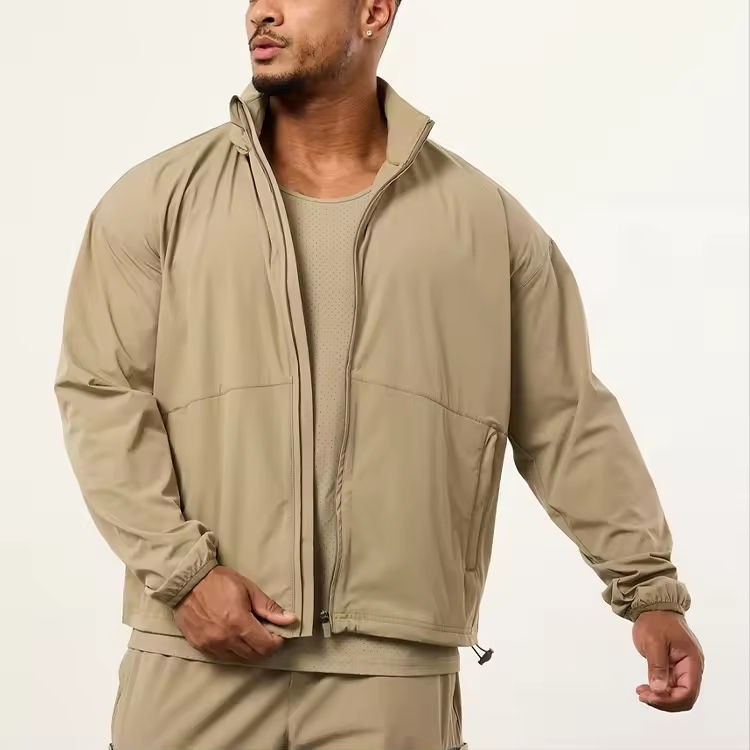
Windbreaker / trench: includes taping, waterproof zippers, multiple panels and storm details—clearly above a hoodie.
Down jacket: includes filling, quilting and down-proof construction—the most expensive to sample, and the most likely to expose filling and quilting issues right at the sample stage.
Fleece / tech style: depends on whether it is laminated and how many special trims are used—a wide range.
The gap between categories comes mainly from panel count and special processes, not from a factory randomly naming a price. If your quote is clearly above its peers, ask "which process does the extra money correspond to" rather than assuming you are being overcharged. Conversely, beware: if one factory quotes the same price for a down jacket and for a hoodie, either it hid the down's complex processes, or it padded the hoodie with unnecessary items. Both cases are unhealthy.
The Hidden Charges Easy to Miss
A quote showing only one total is often not cheap—it is that you cannot see. These items most easily appear suddenly at the sample stage. The protection is simple: write clearly in the sampling agreement what is included, what is not, and how overages are calculated. On paper beats a verbal promise every time.
- Revision fee: unhappy with the sample and want changes—does the second version cost? Many factories include one minor revision in the first sample, charged per round from the second. Not asking before ordering means two revisions can double the cost.
- Rush fee: 7–10 days is the standard cycle; asking for 3–5 days usually adds a percentage.
- Fabric minimum: you specify an unusual fabric, and the supplier may pass the entire roll's minimum order to you.
- Testing / certification fee: if you require specific fabric third-party testing (such as OEKO-TEX), the cost is usually yours.
- Sample shipping: domestic or international—whether shipping is included in the quote must be stated clearly.
When Sampling Is Free or Credited to Bulk
Sampling fees have three common outcomes; the buyer should actively ask which one they fall into:
- Free sampling on large orders: high MOQ, confirmed order—factories often waive the sampling fee as a goodwill gesture. Usually not applicable to small-batch new clients.
- Sampling fee credited to bulk: the most common practice; the sample fee is deducted in the later bulk order, equal to "advance first, return later." Confirm the credit cap and validity period.
- Our policy: Account 1 MOQ starts at 100 pcs; sampling takes 7–10 days; after order confirmation, the sampling fee can be credited to the first order per agreement; at the first-sample stage we give a transparent itemized quote (pattern / fabric / labor / process), nothing hidden. A concrete example: you pay a sampling fee to get the confirmation sample, and once satisfied you place a 100-pc first order—that fee is credited proportionally into the first order, spreading the technical investment into bulk instead of a blank loss.
Before Sampling: a Complete Tech Pack Means Fewer Rounds
Many buyers think the "revision fee" is a factory's intelligence tax, but a fair share of revision fees is actually spent filling gaps in the brief. The blurrier your design drawings and the emptier your process description, the more the factory has to guess; one wrong guess means another round of sampling. Before you start sampling, prepare the following—it often saves you a whole round of fee and time:
The first thing we do before accepting an order is not scheduling production—it is reviewing your tech pack. Whatever is missing, we list it for you to complete, rather than sampling a version first. This looks slow but actually saves you detours. For the complete 5-step process from a drawing to the first sample, we wrote a guide you can cross-reference: From Sketch to First Sample: A Custom Apparel Manufacturer's 5-Step OEM/ODM Playbook.
Why Samples and Bulk Sometimes Do Not Match
What buyers truly fear is often not expensive sampling, but "the sample looks good, the bulk flops." This is far too common in the industry, and the root is usually in three places:
- Different people: the sample goes to a master on a small line, but bulk switches to a rookie line—technique shifts and the fit drifts.
- Different fabric: the sample used a custom-tuned fabric, but bulk swaps to a "similar" cloth to meet the deadline—hand, drape and color tone all change.
- Different inspection: the sample skipped full QC, a few hidden risks masked; bulk ships directly and every problem leaks to your client.
Our control is direct: sample and bulk are completed on the same production line, same process, same QC (AQL 1.5 + 8-step). The sample uses hot-cut taping, and bulk is not allowed to quietly switch to cold glue. Fabric lot is locked, with no "similar substitute" permitted. In one sentence—what the sampling fee buys is not just a sample garment, but a guarantee that "bulk can stably replicate this sample." This is why we say evaluating an outerwear manufacturer's sampling should not look only at the number on the quote, but at whether the pattern and sample it delivers let you confidently go to bulk.
Three Sampling-Charge Models Compared
| Model | Practice | For whom | Risk |
|---|---|---|---|
| Pattern fee, non-refundable | one-time pattern fee, not counted into bulk | one-off small orders, testing the water | high trial cost, lost if switching factories |
| Sampling fee credited to bulk | sample fee deducted in the first order | brands certain to place bulk | confirm credit cap and validity |
| Cost fee for new clients | charged by actual cost, partially returned after order | new cooperation, trust-building period | write return conditions on paper |
Buyer FAQs
How long does sampling usually take?
Standard 7–10 days. Complex processes (down filling, multi-layer taping, laminated fabric) or rush requests (3–5 days) extend the timeline accordingly or add a rush fee. Tell the factory your launch milestone before ordering so they can schedule production.
Unhappy with the sample, is revision charged?
Most factories include one minor revision in the first sample, charged per round from the second. Write "how many revisions are included" in the sampling agreement to avoid the price doubling with no basis after two changes.
What is the minimum sampling quantity?
We usually handle "one confirmation sample plus possible size samples," not forcing multiples; bulk MOQ is 100 pcs. The sampling stage is about confirming design and process, not piling up quantity.
Who owns the IP of the sample?
The dedicated pattern and sample belong to the brand; the factory must not use them for other clients. This must be written into the contract or a confirmation email, especially when you invested in custom design.
Is the sampling fee refundable?
Generally not, because the pattern fee is a one-time technical investment; but it can offset bulk. Per our policy it is credited in the first order, so the buyer effectively does not lose that technical fee.
About Us
We (Eation Outerwear) are an integrated manufacturer and trading company for outerwear, with one plant each in Guangxi and Dongguan, totaling about 20,000 m² and a monthly capacity of roughly 500,000 pcs. We have done OEM/ODM since 2014 and hold BSCI, GRS, ISO9001 and OEKO-TEX certifications. Sampling and bulk are completed on the same production line, so when the pattern matches, bulk will not drift; the dual-plant layout also means that when one plant is tight on scheduling, we can shift work across plants so your sampling does not queue for a line. For the complete process from a drawing to the first sample, we wrote a guide you can cross-reference: From Sketch to First Sample: A Custom Apparel Manufacturer's 5-Step OEM/ODM Playbook.