MOQ, Sampling & Lead Time: A Practical Guide for Apparel Buyers
My argument up front: most brands treat minimum order quantity, sampling time, and production lead time as three numbers on a quote sheet to be bargained down. They are not the same kind of number. MOQ is a learning-rate dial, sampling speed is a hidden-cost multiplier, and lead time is a capacity bet — and small brands lose a season not because a unit price was 5% too high, but because those three dials were turned the wrong way.
A 5% cheaper unit price is worthless if you are sitting on 3,000 unsold units — or if the season passed while you waited for a sample.
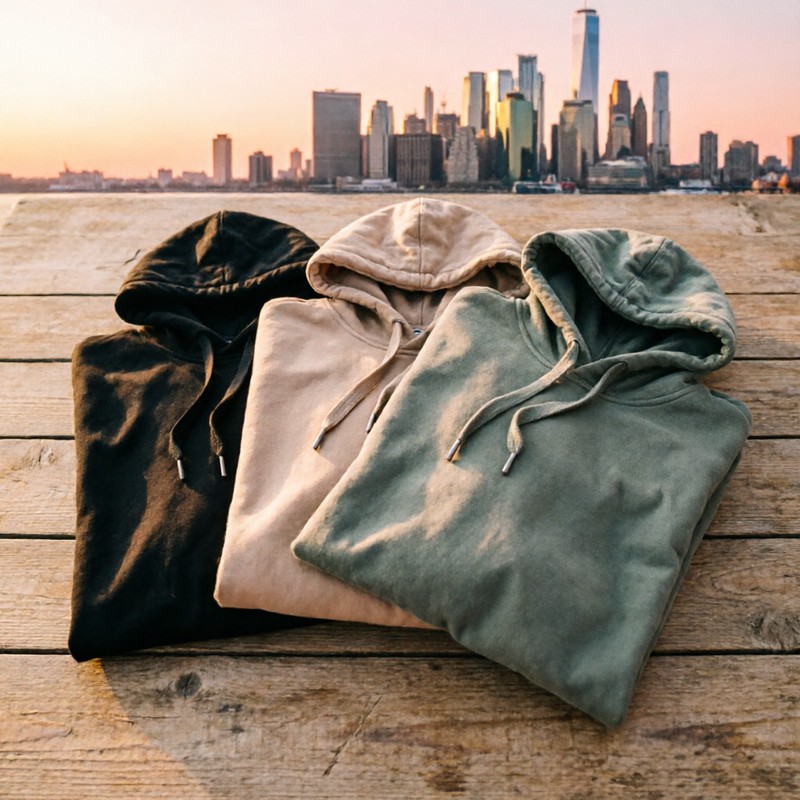
Start with a pattern I keep seeing (not one client's story, but a whole category): a fledgling hoodie brand gets two quotes. Factory A is 8% cheaper per piece but demands 1,000 units per style per colour and takes three weeks to sample. Factory B costs a little more, asks for 100 per style per colour, and samples in 7–10 days. The founder picks A because "it's cheaper." Result: three colours times 1,000 equals 3,000 units in a warehouse, two colours barely moving — while a competitor on Factory B tested their colours small, found the winner in three months, and was already reordering.
MOQ is not a threshold — it is how fast you can learn
At a proper custom hoodie or outerwear operation, MOQ is set per style and per colour, not per order. A workable floor of MOQ 100 pcs per style per colour means you can validate three colourways of one hoodie with 300 units, instead of being forced to gamble 3,000 on a single guess.
Sampling speed is the most underrated lever
Here is a slightly contrarian claim: for a seasonal brand, a sample that arrives two weeks sooner is worth more than a 5% cheaper unit price. Because time is the product. By the time you have sampled slowly, revised, and then placed bulk, the trend window has already curved away. A healthy sampling flow looks like this:
- You send a complete tech pack (construction, fabric weight, colour codes, trims, labelling).
- The factory returns a physical sample in 7–10 working days.
- You approve the sample — this is your cheapest insurance against a bad bulk run.
- Bulk production starts only after sample approval and deposit.
Lead time is not fixed — it is a capacity allocation
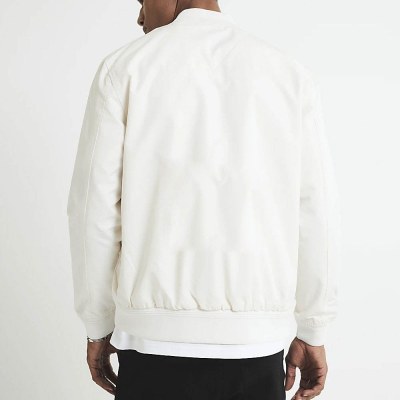
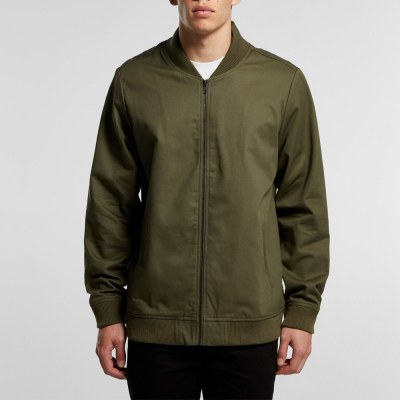
The trade loves to present "30-day production" as law. It is a capacity-allocation problem, not physics. Knit items like hoodies and sweatshirts run roughly 25–35 days; technical outerwear — padded jackets, windbreakers, bombers — needs 35–45 days because of extra steps like filling, bonding, and hardware. But the same factory compresses when you pre-book capacity, and blows up when you jump the queue in week two of peak season.
See the three as one system
The conclusion I actually want you to leave with: MOQ, sampling, and lead time must be negotiated together. Asked separately, they lie to you. A transparent OEM partner — a real hoodie manufacturer or outerwear factory supplier — hands you all three numbers up front, backed by BSCI, GRS, ISO 9001 and OEKO-TEX certifications and real capacity, not a pretty unit price with the rest buried. For global hoodie and outdoor brands, the factory that lets you "fail cheaply and learn fast" is the real moat. It beats saving a few points on unit cost ten times over.

Want to talk through MOQ, sampling, and lead time for your specific styles? Reach out — our Dongguan base, FOB Shenzhen terms, and a two-plant operation producing around 500,000 pieces a month can carry you from a small test run to stable repeats.