How to Choose a Windbreaker Manufacturer: A Sourcing Checklist
How to Choose a Windbreaker Manufacturer: A Sourcing Checklist
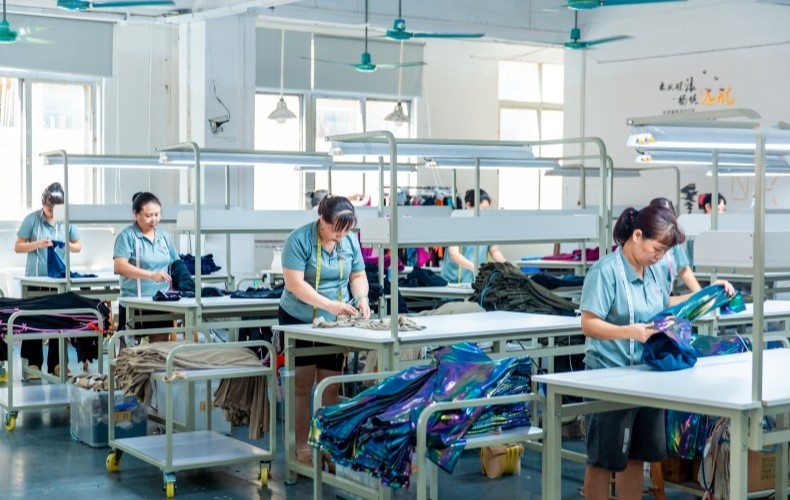
Choosing a windbreaker / shell jacket manufacturer (a windbreaker or shell jacket supplier) is not about who quotes the lowest price — it is about whether eight things hold true at the same time: waterproof structure, seam-taping process, DWR durability, trim quality, breathability-windproof balance, layering ease, sampling consistency, and a compliant lead time. A windbreaker looks light and simple, but it is the most process-hungry category in the outer layer — whether it leaks and whether it still repels water after a few wears both hide in the seams and coatings. Emerging and growing brands are the easiest to trap with the words "waterproof" and "ultra-light," while established brands often miss the process backing by staring only at unit price. At our Guangxi and Dongguan plants we set the shell category MOQ at 100 pieces per style, backed by a dedicated seam-taping line and flexible scheduling rather than a cut-down factory. This article breaks the screening logic into a checklist you can use to read a factory clearly.
- 01A Real Pitfall: A Batch Ruined by the Word "Waterproof"
- 02Gate 1: Waterproof Structure — Coating or Membrane, What Hydrostatic Head
- 03Gate 2: Seam Taping — Whether the Factory's Seams Leak
- 04Gate 3: DWR Durability — Absorbs Water After a Few Washes
- 05Gate 4: Trims — Zippers and Adjuster Details
- 06Gate 5: Breathability vs Windproof — How the Supplier Balances
- 07Gate 6: Fit and Layering Ease
- 08Gate 7: Sampling Consistency and AQL 1.5 — the Factory's QC Baseline
- 09Three Types of Suppliers, Side by Side
- 10Lock Your Windbreaker Factory in 5 Steps + Common Questions
A growth brand building a light-outdoor and urban-commute line wanted to make the windbreaker (windbreaker shell) its spring-summer hero — light, wind-blocking, and unfazed by a little rain. Brands like this usually open with "quote us a waterproof windbreaker" and "what is your MOQ." But what actually decides whether this batch gets buried in bad reviews after it reaches the warehouse is the eight gates below. Start with a real lesson we have seen on the floor.
A Real Pitfall: A Batch Ruined by the Word "Waterproof"
An emerging DTC outdoor brand launched a lightweight windbreaker positioned for "urban rainy-day commuting." They found a factory quoting 12% below a specialist, and the supplier's product page shouted "waterproof and windproof" in large type. Before ordering, the brand only asked about color and unit price — they never asked how the waterproofing was actually done. When bulk hit the warehouse, three problems exploded at once: first, water seeped through the shoulder seams and under the zipper, with customers reporting "sleeve roots soak through after ten minutes in rain"; second, the DWR water-repellent layer basically failed after three washes, and water just pooled on the fabric surface; third, the main zipper jammed, and teardown revealed an unbranded zipper, not the YKK the brand assumed.
When the brand pushed back, the factory explained "we made this as a regular jacket — the seams were cold-glued, no taping machine involved, and the DWR was a basic formula." That batch not only ate returns and lost money, it hit right in the rainy-season peak and dropped the store rating by half a grade. The problem was not "the factory deliberately cheated you" — it was that this factory treated the shell as a regular woven jacket, with no waterproof seam-taping line and no DWR process discipline. Lesson one in picking a windbreaker factory: do not let the word "waterproof" set the pace — ask clearly how it is made waterproof.
The most expensive part of a windbreaker was never the fabric — it is the dozens of seams. Fabric can be bought ready-made; the seam-taping process is the factory's real threshold. If you cannot get a clear answer on taping, you have not asked about waterproofing at all.
Gate 1: Waterproof Structure — Coating or Membrane, What Hydrostatic Head
"Waterproof" splits into at least two paths on the manufacturing side: coating (a PU/TPU layer applied to the back of the fabric) and membrane (a laminated ePTFE-type or PU-film composite). Coating is cheaper and suits lightweight windbreakers; membrane holds a higher hydrostatic head and ages better, but the laminating equipment and process threshold are also higher. Judge whether a factory truly understands it by whether it can explain three things:
Can it quote a hydrostatic head number
A specialist will hand you a spec like "hydrostatic resistance ≥ 5000–10000 mm water column" and tell you which face was tested and against which standard (such as ISO 811). If all you get is "don't worry, it's definitely waterproof," pass. For how waterproof ratings are tested and which level suits which scenario, we have a companion guide, the shell jacket waterproof ratings guide, you can cross-reference.
Does it conflate coating and membrane
Some factories call "we brushed on a layer of PU" a "waterproof breathable membrane" — that is concept-swapping. A coating is basically non-breathable or only micro-breathable; only a membrane talks about moisture vapor transmission. When you ask "is this structure a coating or a laminated membrane, and what is the MVTR (moisture vapor transmission rate)," if they stall, the factory has no material-engineering capability and is just reselling fabric.
Is the fabric source traceable
Established brands entering EU and US channels are routinely asked for fabric composition and supply-chain traceability. A specialist can give you the fabric's material number, weight, and supplier information, and even support a GRS recycled-content version. One that cannot explain the source will stall your compliance later.
Gate 2: Seam Taping — Whether the Factory's Seams Leak
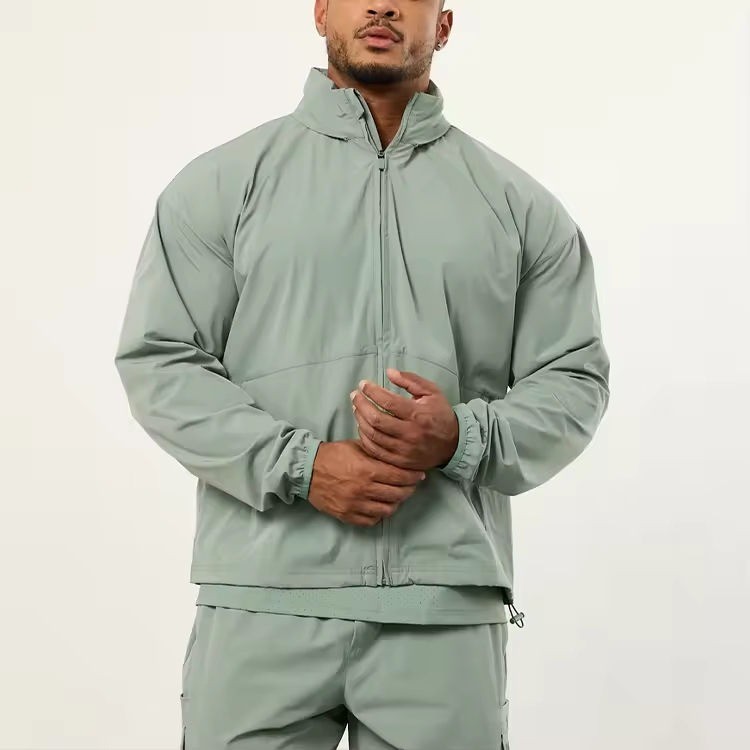
No matter how waterproof the shell fabric is, if the needle holes at the seams are not sealed, water follows the holes straight in. Sealing the seams relies on seam tape heat-pressed on with a machine. There are three tiers of capability here:
No taping (locked edges only)
This is what a regular woven factory does — the needle holes are exposed. A "windbreaker" like this seeps within ten minutes in light rain; it earns the name windproof, not waterproof. When you see a factory's "waterproof style" with no taping step, be alert immediately.
Cold glue / hand dabbing
Glue is applied locally to patch — cheap but uneven, and corners and zipper roots leak most easily. The pitfall case above got stuck right here. It suits ultra-low-cost non-functional styles and should never appear on a "waterproof" positioned product.
Heat-taped (heat-taped)
A dedicated taping machine heat-presses the tape onto the seam — continuous, even, and inspectable. Our shell line runs heat-taped seams, and after taping we do a full-garment leak sample (spray bottle or rain tower). When auditing a factory, ask directly "are the seams heat-taped or cold-glued, how many taping machines do you have, how do you handle corners" — only one that answers with specifics truly has a dedicated line.
Audit cheat-sheet: Ask the factory for a photo of a taping workstation in action and a close-up of a taped seam, and eyeball whether the tape is continuous and free of lifting. One that dares send and can explain the taping temperature is basically reliable; one that only sends retouched finished shots, be careful.
Gate 3: DWR Durability — Absorbs Water After a Few Washes
DWR (durable water repellent) is the finish on the fabric face that makes "water beads roll off," but it decays with washing and friction. A poor DWR fails after three or five washes; a good one lasts dozens of cycles and can be reworked. Two checkpoints:
Does it state a durability cycle count
A specialist will mark "DWR remains ≥ 80% repellent after 20 wash cycles" and state the base chemistry (fluorine-free C0 or fluorinated C8; Europe and the US now broadly require C0 fluorine-free). One that only says "we did water repellent" with no cycle count basically delivers a one-time effect.
Can it be reworked (re-DWR)
After DWR decays, a reliable supply chain lets you rework the repellency instead of scrapping the whole batch. This is especially valuable for growth brands running seasonal styles and reorders — you do not have to clear out stock just because the repellency failed.
Gate 4: Trims — Zippers and Adjuster Details
Windbreaker failures often happen at the trims: jammed zippers, broken adjusters, non-sticking hook-and-loop. These small parts decide whether the garment holds up in real use.
Are the zippers brand-grade
Our main and pocket zippers default to YKK (or equivalent brand-grade), because zipper failure is the number-one cause of outdoor returns. When auditing, ask "what brand are the zippers" directly; if they vaguely say "imported zippers" but cannot name the brand, be careful.
Is the adjustment system complete
Hood adjusters, hem drawcords, cuff hook-and-loop — these decide whether wind sneaks in through the seams. A specialist builds the adjusters as standard and gives fit advice; a cost-cutting factory often drops the hem drawcord and calls it "minimalist design."
Gate 5: Breathability vs Windproof — How the Supplier Balances
Pure windproof with no breathability, and you are soaked from your own sweat after ten minutes of activity; pure breathable with no windproof, and standing in the wind is like wearing nothing. A good shell balances the two through fabric MVTR and structural venting (such as pit zips, back mesh).
When auditing, ask "what is the MVTR of this style, does it have venting structure" — a factory that can explain the trade-off is one that truly makes functional outerwear; one that says "both breathable and waterproof" to please both sides usually meets neither.
Gate 6: Fit and Layering Ease
A windbreaker is an "outer layer" — usually it still needs to go over fleece or light down. If the pattern is built for single-layer wear, it turns tight and rides up the moment you add a layer. A specialist allows layering ease in the shell, adding room at the chest and armscye, and gives "recommended mid-layer thickness."
This matters especially for growth brands building a range — your fleece and your shell need to sell as a system, and incompatible patterning means nobody buys. Our two plants have made outerwear for years; the shell and fleece patterns are developed as a matched set, not each on its own.
Gate 7: Sampling Consistency and AQL 1.5 — the Factory's QC Baseline
A shell's hidden defects are even more elusive than a hoodie's: lifting tape, patchy DWR, offset zippers — none visible at a glance, all exposed after a season of wear. So we use the same AQL 1.5 + 8-step QC as our hoodies, and add two shell-specific steps: a tape-adhesion test and a full-garment rain-shower sample. The sampling step also holds to sample and bulk on the same line, same process, same QC — the sample uses heat-taped seams, and bulk is never allowed to quietly switch to cold glue. For how sampling actually runs and what to prepare, we wrote a companion guide, the five-step outerwear sampling guide, you can cross-reference.
Three Types of Suppliers, Side by Side
Compress the seven gates above into one table; the real gap between a shell specialist, a comprehensive mega-factory, and a small workshop is clear at a glance:
| Factor | Shell Specialist | Comprehensive Mega-Factory | Small Workshop |
|---|---|---|---|
| Waterproof structure | Coating/membrane selectable, quotes hydrostatic head | Mostly coating, membrane often outsourced | Coating only, no numbers |
| Seam taping | Dedicated heat-taping line, inspectable | Has it but often mixed lines, corners leak | Cold glue or hand dabbing |
| DWR durability | States cycles, reworkable | Basic DWR, hard to rework | One-time, fails after a few washes |
| Trims | YKK-grade, full adjusters | Brand-grade but often downgraded | Off-brand, high failure rate |
| Breathability balance | Quotes MVTR, has venting | Concept vague | Basically non-breathable |
| Sampling cycle | 7–10 days, in-house pattern room | 15–25 days, often outsourced | Depends on the master's schedule |
| QC system | AQL 1.5 + 8 steps + rain-shower sample | Generic garment QC, shells easily missed | Owner eyeballs, no standard |
| Shipping & lead time | FOB Shenzhen, lockable nodes | FOB major port, long queue | Often you find your own freight forwarder |
Lock Your Windbreaker Factory in 5 Steps
Turn the seven gates above into executable actions; keep a record at each step:
Common Questions
What hydrostatic head is enough?
It depends on the scenario. A lightweight windbreaker for urban commuting is usually fine around 5000 mm hydrostatic resistance; for real moderate-rain outdoor use, start at 10000 mm and pair it with heat-taped seams. The key is that the factory can quote a specific number and test standard, not just say "waterproof."
What is the real difference between heat-taped and cold glue?
Heat-taped seams use a machine to heat-press tape onto the seam — continuous, even, and batch-inspectable — and are the baseline process for functional outerwear. Cold glue is hand or local brushing, and corners and zipper roots leak most easily. The former costs more but is stable; the latter is cheap but risky — this gate tops the priority list when picking a factory.
Can failed DWR be saved?
A good supply chain supports reworking the repellency (re-DWR), so the whole batch does not get scrapped. The premise is that the initial DWR is a C0 fluorine-free reworkable formula. When auditing, ask directly "can DWR be reworked, with what equipment" — if they cannot answer, they have no such after-treatment.
Can a 100-piece MOQ make a custom waterproof shell?
Yes. At the 100-piece tier we support custom fabric (coating/membrane choice), custom hydrostatic head, custom DWR, and pattern tweaks, backed by a shell-dedicated line and flexible scheduling rather than relabeling stock. A composite membrane structure developed fully from scratch is still priced as a development order, and we state that up front.
A comprehensive mega-factory quotes 12% lower — isn't that better value?
Not necessarily. The low unit price often comes from treating the shell as a regular jacket and skipping the seam-taping line and DWR process discipline; the hidden return and bad-review costs ultimately land on you. The earlier case "ruined by waterproof" saved 12% on the surface but lost a whole season of rating. For a process-hungry category like functional outerwear, a specialist's full-cycle cost is usually lower.
About Us (Outer-Layer OEM·ODM and Private Label Partner for Emerging, Growing and Established Brands)
We have focused on outer-layer manufacturing since 2014. Our Guangxi and Dongguan plants total 20,000㎡ with 500,000 pieces monthly capacity, holding BSCI (Grade B), GRS, ISO 9001, and OEKO-TEX Standard 100 certifications, running AQL 1.5 + 8-step QC, with the shell line adding tape-adhesion and full-garment rain-shower sampling, shipping FOB Shenzhen. The shell category MOQ is 100 pieces per style, backed by a heat-taped seam line and flexible scheduling rather than a cut-down factory. We take both private label small-batch development for brands starting out and wholesale-scale stable reorders, and both lines share the same heat-taped seam line and AQL 1.5 QC. To see our development process and real capacity, read our capsule outerwear line build guide.
Whether you are starting out with your own private label or replenishing wholesale, before you pick your windbreaker / shell jacket manufacturer, get your functional requirements clear: send us your coating-or-membrane choice, target hydrostatic head, DWR cycles, or the style you want to make. We return a first sample in 7–10 days and give you a transparent quote at a flexible 100-pieces-per-style MOQ — get a shell sampling and quote plan built for your brand.