From Sketch to First Sample: A Custom Apparel Manufacturer's 5-Step OEM/ODM Playbook
Manufacturer's View: Why Growing Brands Must Treat Sample Development Like Engineering
From a sketch to the first re-orderable sample is not "the factory makes one piece" — it is five engineering steps: lock the tech pack, confirm the lab-dip color, build proto / size-set / PP samples, run pre-shrinkage validation, and seal the golden sample. We run 100-piece MOQ custom hoodies and light outdoor clothing (outdoor clothing) for growing brands, with an in-house pattern room first sample in 7–10 days; only when these five steps are solid can the 25–35 day bulk stay stable. Treating sample development like engineering is the lowest-cost way to avoid a reorder disaster.
- 01Manufacturer's view: why sample development is engineering
- 02Factory floor lesson: how a missing tech pack sank the timeline
- 03Step 1: Lock the tech pack (how a manufacturer reads it)
- 04Step 2: NDA and lab-dip color approval
- 05Step 3: Proto / size-set / PP samples
- 06Step 4: Pre-shrinkage and wash validation
- 07Step 5: Seal the golden sample (ready to reorder)
- 08Common questions from brand owners
A growing streetwear and light-athletic brand had the sketch, found a manufacturer, and assumed "send a picture and the factory makes a sample." The first sample came back — sleeves 2cm short, pocket misaligned, color darker than the design — three rounds to barely acceptable, and the planned launch slipped six weeks. The problem is not the factory's craft; it is treating sample development as "make one piece" instead of "build a replicable production line."
Below is the real five-step process from the production floor: what the factory confirms at each step, what the brand must provide upfront, and why we insist on "no sealed sample, no reorder."
For growing brands, this process is worth more than it is for the big names. A major brand has a dedicated merchandiser and redundant budget — one misstep gets absorbed. A growing brand is often one founder wearing the buyer hat, with thin budget and a narrow window; one extra sampling round can miss the entire season. So the smaller the team, the more you should treat sample development like engineering — use process certainty to hedge against volume uncertainty.
Factory Floor Lesson: How a Missing Tech Pack Sank the Timeline
A recently funded DTC brand eager to launch sent only a front rendering and said "make it feel like the picture, you pick the fabric." First sample: narrow fit, lighter GSM than expected — revise. Second: pocket position off — revise. Third: color finally right, but only ten days left to the planned launch, the production pool was full, and it slipped to next month. Three sampling rounds plus one scheduling slip ate the entire fall and winter window.
The root cause: step one never happened. No tech pack, so the factory can only guess; guess wrong and it reworks, occupying the sampling slot; once the sampling slot is occupied, bulk scheduling collapses. This loss is common among growing brands — not a weak factory, but a missing document at step one.
Step 1: Lock the Tech Pack (How a Manufacturer Reads It)
A tech pack is not a design render; it is the "construction drawing" for the factory: size spec with tolerances, fabric composition and GSM, trims (zipper / rib / wash label), construction notes (stitching, topstitch, print position), and target hand-feel. Our first move on receiving it is not cutting — it is a manufacturability review: which processes our dual-factory system can do in-house, which need outsourcing, which fight the GSM. This step blocks 80% of later rework before the cutting table.
Many brands treat the tech pack as a "shipment document"; it is more like a "contract appendix." The more detailed, the less the factory improvises, the higher the first-pass rate. Vague "make it feel a bit nicer" is the five most expensive words in apparel.
The element most often missing from a tech pack is tolerance. ±1cm versus ±0.5cm on a sleeve are different things: the former is easy to schedule but inconsistent across the batch; the latter is consistent but demands better equipment and sewing. We nail every tolerance with the brand during review, so the sample passes and the bulk does not drift.
Step 2: NDA and Lab-Dip Color Approval
Before formal sampling, both sides sign an NDA; the brand's design and pattern enter a controlled state, and the factory cannot leak or give them to a third party to copy. This matters especially for growing brands — your pattern is your moat; no NDA, no development is a hard rule in our dual-factory system.
The most underestimated part of color approval is the dye-lot difference. Same formula, different dye lots show visible deviation, especially deep blue, wine red, and forest green. So we first issue a lab-dip (small lab sample) for the brand to seal a "benchmark color," and every bulk lot is checked against that benchmark card. Dyeing without a sealed color means the whole batch comes out uneven — only re-dye or scrap.
Step 3: Proto / Size-Set / PP Samples
Samples are not one-shot; they advance in three stages:
Proto sample: first validate pattern and structure, usually grey cloth or a near fabric — fast and cheap, purpose is to lock the "shape."
Size set: using the confirmed fabric, make one of every size (XS–XXL and so on) to check the size curve's gradient is reasonable — brands often skip this and end with M fitting but XXL running short.
PP sample (pre-production): using bulk fabric, bulk trims, and bulk sewing — a "standard piece" as the reference for reorders. Only after the PP passes do we talk bulk.
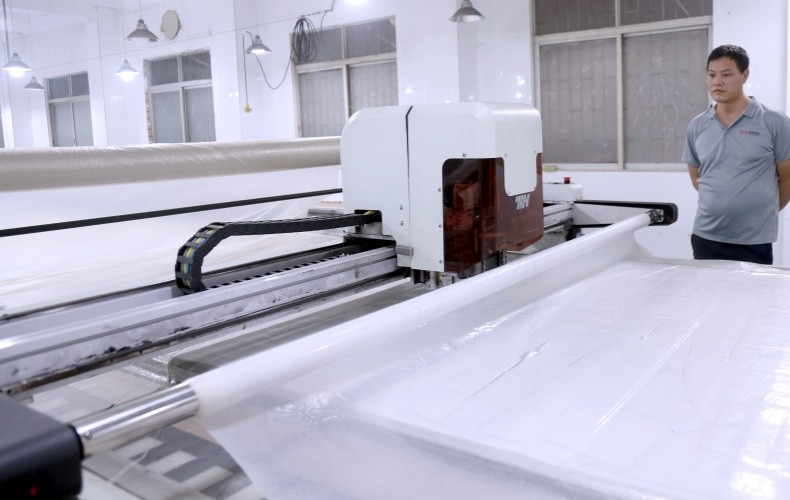
Three sampling stages look costly and slow, but they split risk at minimum cost: each stage solves one class of problem, so "shape wrong" and "color wrong" never mix into one undecipherable mess where no one knows what to fix.
Step 4: Pre-Shrinkage and Wash Validation
A good-looking sample is not enough; it must "still look good after washing." Before sealing we run pre-shrinkage and wash tests: measure shrinkage (cotton knit norm 3–5%) and back-calculate it into the pattern; also check post-wash pilling, color bleed, and deformation. This directly decides how the bulk wash label reads and whether buyers complain after one wash.
For light outdoor clothing (outdoor clothing) — "active without stuffiness, holds shape after wash" — pre-shrink validation is especially critical. Our fabric lab issues a shrinkage and post-wash report the brand can request during a factory audit; it speaks louder than any verbal promise about whether a manufacturer is reliable.
Step 5: Seal the Golden Sample (Ready to Reorder)
Once the first four steps pass, seal one golden sample: signed, archived, filed. It is the "ruler" for all future bulk — every bulk piece must match the golden sample's shape, color, and construction. Once sealed, reorder is "copy against the ruler," no longer dependent on one sewing master's feel; quality stays stable and lead time becomes estimable.
We never accept a reorder without a golden sample. The reason is plain: you ask us to "make it like the last batch," but "the last batch" was never archived; the master changes shift, the dye lot changes — it comes out a different garment. The golden sample is that ruler; no ruler, no cutting.
With the five steps done, a sample from sketch to re-orderable typically takes 7–10 days in our in-house pattern room; once in the bulk pool, 25–35 days to lock. Run the process well and a growing brand tests a new structure with 100 pieces, reorders once data confirms — the steadiest line-expansion rhythm. Seal the golden sample and every subsequent order is "copy against the ruler," and lead time goes from "luck" to "estimable" — which is exactly why we would rather spend two weeks at sampling than lose a month at bulk.
Common Questions from Brand Owners
Does the tech pack need to be super professional, can a small team write one?
Not thick, but the elements must be complete: size spec with tolerances, fabric composition and GSM, trim list, construction and print positions, target hand-feel. On receipt we run a manufacturability review and help turn unclear parts into executable factory instructions. A one-page table plus a few annotated images is enough; the key is "specify" not "feel."
Will three sampling rounds be expensive and slow?
The proto uses grey or near fabric — low cost, fast; the real money is the PP sample. Budget the front-end sampling to save the bulk rework — bulk done wrong costs tens of times the sampling. On time: in-house pattern room delivers the first sample in 7–10 days, faster and more controllable than outsourcing.
Is dye-lot difference unavoidable, and how do you minimize it?
It is a physical property of dyeing, cannot be zeroed, but can be controlled to barely visible: seal the lab-dip benchmark first, check every bulk lot against it, and re-dye the whole lot if off-tolerance. High-risk colors (deep blue, wine, forest green) get proactive extra checks. The key is seal the color before dyeing — do not wait for the whole batch to find it uneven.
Can a 100-piece small run go through all five steps?
Yes, and it should all the more. Tech-pack review, color seal, three-stage sampling, pre-shrink validation, golden sample seal — all unchanged at the 100-piece MOQ. Precisely because small volume means high trial cost, lock the process before reorder. First sample 7–10 days, bulk 25–35 days; a small run does not mean a lower standard, only getting it right sooner.
About the Production Line
Two factories in Guangxi and Dongguan, 20,000㎡ combined, 500,000 pieces monthly capacity, making streetwear and light outdoor clothing (outdoor clothing) on OEM / ODM terms since 2014, for 1,200+ brands. The in-house pattern room handles tech-pack review, three-stage sampling, and golden-sample sealing; the fabric lab runs shrinkage, pilling, color-bleed, and wash validation; garment QC follows AQL 1.5 plus an 8-step process; certified BSCI (Grade B), GRS, ISO 9001, OEKO-TEX Standard 100. Port of shipment: Shenzhen (FOB Shenzhen).
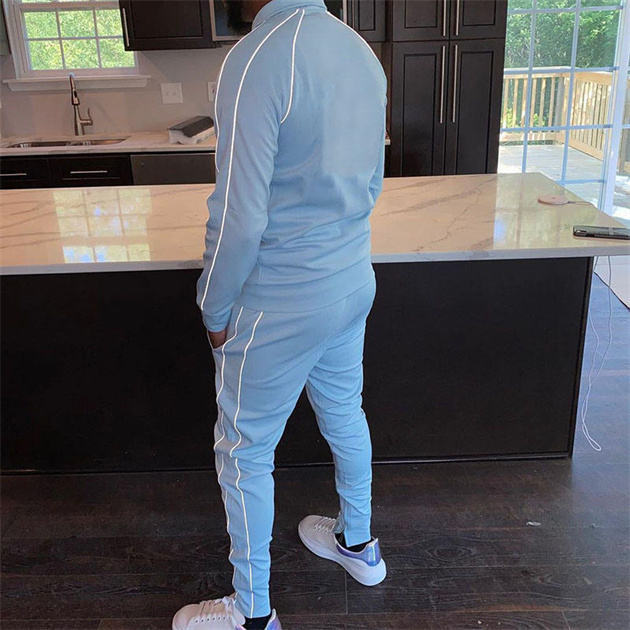
Ready to turn your sketch into a re-orderable sample? Send us the design, target sizes, and desired hand-feel, and we return a development plan with tech-pack review and sampling timeline — from locking the tech pack to sealing the golden sample, five steps then reorder, and 100 pieces gets the new structure running steadily.