CRAFTED FOR COMFORT. ENGINEERED FOR OUTDOORS.

Home / All / Fabric & Sourcing Guide / From Sketch to First Sample: 5 Foundational Steps to Develop Custom Apparel with a Verified OEM/ODM Manufacturer

From Sketch to First Sample: 5 Foundational Steps to Develop Custom Apparel with a Verified OEM/ODM Manufacturer

Aug 31,2026

Fabric & Sourcing Guide 8 min read Sample Development Team

A Practical Process Guide for Activewear & Yoga Wear Brand Founders

Executive Takeaway A first production sample is a functional blueprint — not a finished retail product. For emerging activewear and yoga wear brands, structuring the sampling process around five well-defined milestones shortens pre-production by up to 30% and keeps first-article defect rates below 1.5%. Skipping a milestone almost always surfaces later as a bulk-production cost — not a development one.

01Lock Your Tech Pack Before Requesting Quotes

Vague references lead to costly revisions. An OEM/ODM apparel factory cannot accurately estimate fabric yield, machine setup time, or CMT (Cut, Make, Trim) rates from a mood board or flat illustration alone. A comprehensive tech pack is the single document that converts a design concept into a manufacturable specification — and it is the most controllable variable in your entire sample-development timeline.

A complete tech pack must specify:

  • Fabric specifications: composition, weight (e.g., 450 GSM French Terry for heavyweight hoodies or 75D interlock polyester for activewear), and finish (such as DWR coating or brushed back).
  • Graded measurement specs: point-of-measure (POM) charts across your full size run with explicit manufacturing tolerances (typically ±0.5 cm to ±1 cm).
  • Bill of materials (BOM): thread gauge, drawcord construction, zipper specifications (e.g., YKK reverse-coil waterproof), and all custom trims.
  • Construction methods: specific stitch requirements such as 4-needle 6-thread flatlock for athletic wear, or seam-sealed taping for technical outerwear.

02Establish Legal Protection & Verify Fabric Feasibility

Before sharing proprietary artwork, CAD pattern files, or unique block patterns, establish a bilateral Non-Disclosure Agreement (NDA) with your manufacturing partner. Once your IP is protected, evaluate fabric feasibility against real minimum-order quantities (MOQs) — not aspirational ones.

For performance garments, insist that lab-dip color approvals include spectrophotometer data (ΔE < 0.8) alongside physical swatches viewed under standardized D65 light boxes. This single protocol eliminates the "approved on screen, rejected in production" cycle that delays most first runs by 2–3 weeks.

Sourcing RouteLead TimeTypical MOQBest Suited For
In-Stock Greige Fabric3–7 business days50–100 piecesFast prototype testing, baseline sizing, pre-launch photoshoots
Custom Milled & Lab-Dipped20–35 business days300–800 metersCustom brand pantones, proprietary GSM blends, performance finishes
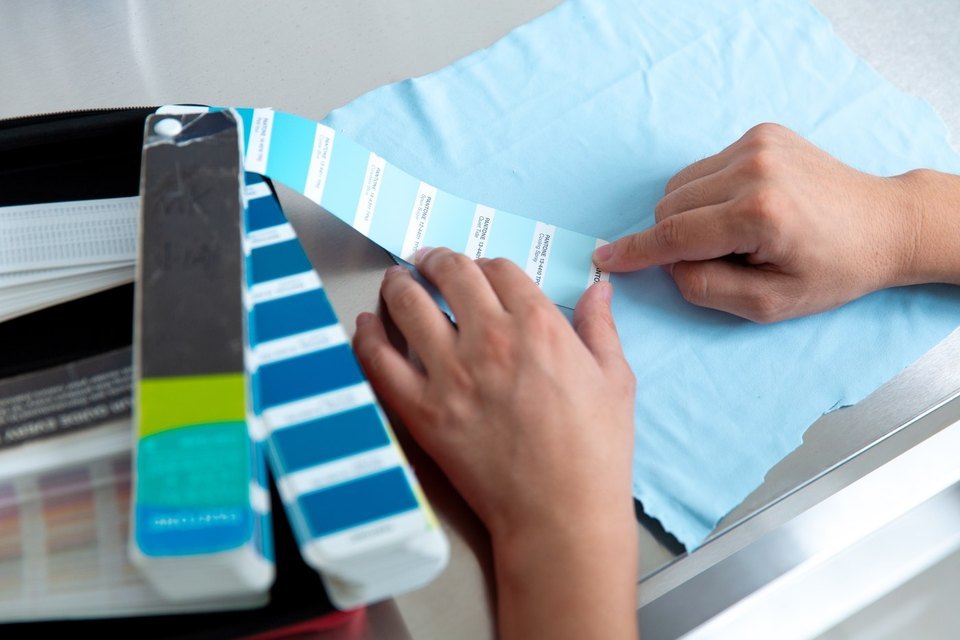
Lab technician matching a Pantone color book against a fabric swatch under a D65 light box
Figure 1 — Color approval: physical swatches are matched to standardized Pantone references under D65 illumination to lock color accuracy before bulk production.

03Align on the Right Sample Type (Proto, Fit, or PP)

Do not expect a retail-packaged garment on run number one. First-run sampling serves three distinct developmental purposes — each with its own fabric, timeline, and acceptance criteria.

1. Proto Sample

Concept Check. Focuses strictly on structure, silhouette, and pocket placement. Often built from available factory stock fabric in substitute colors to compress turnaround to 5–7 business days.

2. Fit Sample

Anatomy & Motion. Evaluates athletic drape, dynamic stretch recovery, and panel tension on a live fit model or digital avatar. This is where pattern blocks are sized to your target market.

3. Pre-Production (PP) Sample

The Golden Standard. Built from bulk-approved fabric, branded hardware, custom neck labels, and final polybags. Two signed duplicates are retained — one on the line as the bulk benchmark, one for inbound QA inspection.


04Run Physical Stress & Pre-Shrinkage Validation
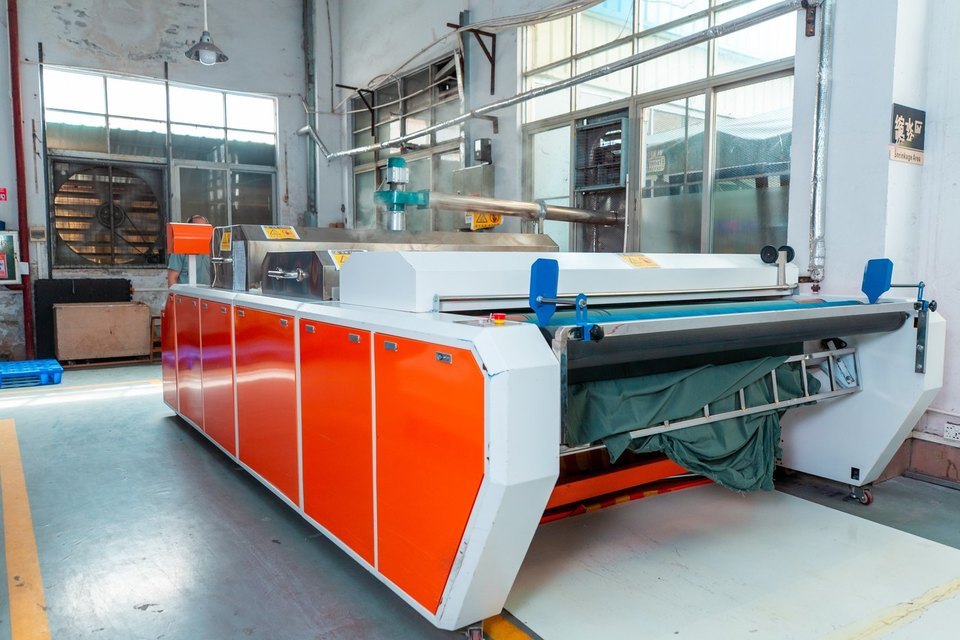
Physical garments must withstand real-world wear and commercial laundering without dimensional distortion. Technical activewear and heavyweight fleece fabrications require rigorous pre-treatment before you sign off on bulk cutting.

Evaluate these physical parameters during sampling:

  • Dimensional shrinkage: high-density fleece and cotton knits require heat-setting and pre-shrinking to keep total length and width shrinkage under 3% after commercial washing.
  • Torque & side-seam twisting: ensure grainlines are aligned to prevent spiral distortion during washing cycles.
  • Hydrostatic pressure (for technical shells): verify lab test values meet your minimum water-column rating (commonly 5,000–15,000 mm) along with tape-seam adhesion stability under repeated mechanical stress.
Eationwear pre-shrinkage and finishing machine (shrink-setting stenter) processing fabric in the finishing room
Figure 3 — Pre-shrinkage setting: bulk fabric is heat-set and compacted on a stenter machine before cutting to lock dimensional stability within a 3% tolerance.

05Document Changes & Approve the Golden Counter-Sample
Sample feedback should never rely on subjective descriptions. Comments like "the armhole feels tight" or "the hoodie looks too small" create miscommunication across international supply chains. Instead, submit structured sample evaluation sheets built on three disciplines:

  • Photograph deficiencies on a flat cutting table with an industrial ruler visible against the measurement line — never against the body, never under ambient room light.
  • State target vs. actual numbers explicitly: "Chest width measured 58 cm; tech pack calls for 60 cm. Adjust pattern block +2 cm."
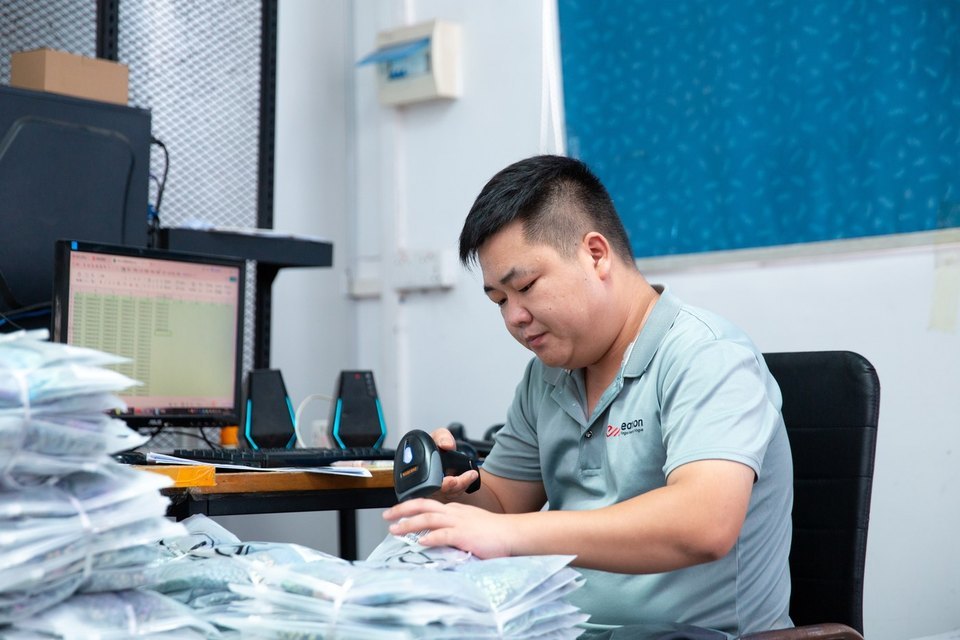
  • Retain the physical counterpart: when approving the final PP sample, request two signed duplicates. The factory keeps one on the line as the bulk benchmark; your QA team retains the other for inbound shipment inspection.
Eationwear QC technician scanning finished garments with a barcode scanner during inbound quality inspection
Figure 4 — Inbound QA: every finished garment is scanned and measured against the golden counter-sample before packing.

06How Eationwear Supports Your Sample Development
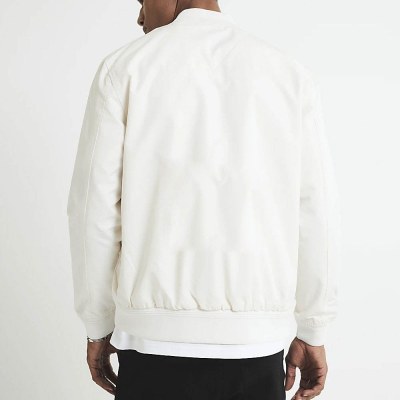
As a BSCI-, GRS-, ISO 9001-, and OEKO-TEX Standard 100-certified OEM/ODM manufacturer operating two production facilities with a combined monthly capacity of 500,000 pieces, Eationwear runs a structured sampling workflow designed for emerging and scaling activewear brands:

  • 7–10 day standard proto-sample turnaround on confirmed tech packs.
  • AQL 1.5 inspection standard across an 8-step in-line quality control process.
  • In-house fabric lab with spectrophotometer color approval and physical swatch matching under D65 light.
  • Dedicated sample development lead assigned to each project from tech-pack intake through PP sign-off.
  • Initial sampling fees credited 100% against your first bulk purchase order.
Final Thought: The Sample Is the Spec A well-run sampling process is not a cost center — it is your most reliable insurance against bulk-production errors. Every signed golden counter-sample on the line is a measurable reduction in inbound-defect risk, lead-time variance, and cross-border miscommunication. Treat the sample as the spec, and the bulk run takes care of itself.

Ready to develop your first sample? Send your tech pack or reference garment — our OEM/ODM team responds within one business day.

Send Your Tech Pack
Published by the Eationwear Sample Development Team · Fabric & Sourcing Education Series

Are you looking for a reliable manufacturer of down home textile products?

We can quickly provide customers with market analysis, technical support and customized services.
subscription

CRAFTED FOR COMFORT. ENGINEERED FOR OUTDOORS.