French Terry vs Brushed Fleece: A Hoodie Manufacturer's Fabric Guide
Manufacturer's View: Why Growing Brands Must Choose Right Between French Terry and Brushed Fleece
French terry (unbrushed loopback) and brushed fleece (napped interior) both come from circular knitting; the entire difference is in finishing. For cross-season, breathable, well-draped hoodies and light outdoor clothing, choose french terry. For winter "cloud-soft" high-insulation capsule pieces with visual volume, choose brushed fleece. We run 100-piece MOQ custom hoodies from our Guangxi and Dongguan dual factories, and keep both fabrics in stock — the real key is defining the wear scenario before you lock the structure.
- 01Manufacturer's view: why the right fabric choice matters
- 02Factory floor lesson: a wrong fabric that sank a DTC brand
- 03Technical breakdown: loopback vs napped (how a manufacturer tells them apart)
- 04GSM weight ranges our factory keeps in stock
- 05One table: how suppliers quote the two structures
- 064 steps to choose fabric by brand positioning
- 07Common questions from brand owners
A growing DTC streetwear brand has its hoodie line running steady and wants to add a light outdoor clothing line this fall and winter. They are not short on design — what they lack is "how to choose right between french terry and brushed fleece." Choose wrong and it is not just a look issue; it means a full re-pattern, a wave of complaints, and inventory that locks up dead. The two fabrics both look "substantial," but the logic of how they wear on the body is completely opposite.
Below is the real material-selection logic from the production floor: what scenarios each fabric fits, how to set GSM, how to control shrinkage and pilling, and why we stock both yet never push you toward one blindly.
Factory Floor Lesson: A Wrong Fabric That Sank a DTC Streetwear Brand
A vintage-sport brand expanding a light outdoor line wanted a "thick, warm" hooded hoodie for its winter capsule; the supplier defaulted to french terry at 380GSM. After launch, northern buyers reported "looks thick, but the wind cuts right through, no real cold protection," and returns ran high. The brand switched to brushed fleece, but the pattern had been built for terry drape — once swapped, the whole garment ballooned, the hood would not stand, and another round of re-patterning and dead stock followed.
The post-mortem shows three layers of loss. The first is the most direct: the entire batch re-patterned and re-produced, eating the season's margin. The second is the launch window — miss the cooling season and no amount of traffic sells. The third is the most damaging: buyers lose trust in the brand's "thickness promise," dragging both repeat purchase and new-customer conversion down together. Combined, getting the fabric wrong costs several times more than getting it right up front.
Technical Breakdown: Loopback vs Napped Interior (How a Manufacturer Tells Them Apart)
Both fabrics come from specialized circular knitting, typically 100% combed ring-spun cotton, high-density CVC (cotton-polyester blend), or recycled technical synthetics. But the finishing step after knitting is what splits their performance apart — and that is exactly the step a manufacturer must confirm with the brand before sampling: scenario first, structure second.
There is also a sourcing-side point often overlooked: french terry is a "finished-once-knitted" grey fabric — from grey cloth to finished goods it only needs washing and heat-setting, a short supply chain with fast replenishment. Brushed fleece adds napping, shearing, and heat-setting, and if any one step is over- or under-done, both hand-feel and GSM drift. So when customizing fleece, we require the supplier to keep sealed reference swatches by confirmed hand-feel and match every dye lot to that swatch. One extra process means one extra variable to control.
French Terry (Unbrushed Loopback): Factory Floor Reality
French terry shows a smooth, flat plain face and an interior of unbrushed, visible yarn loops. Those tiny loops act like micro air channels, letting air circulate, so it breathes, stays light, and drapes. It does not rely on "fluff" for warmth — it relies on the fabric's own density and weight. For streetwear hoodies that should look structured and not bulky, terry is the standard choice.
Brushed Fleece (Napped Interior): Factory Floor Reality
Brushed fleece adds one more step after knitting: a napping / raising process that pulls and combs the interior fibers into a nap. That nap traps air and lifts insulation immediately, giving a "cloud-soft" touch. The cost is more bulk and volume, less drape than terry, and a napped side that sheds and pills more easily. For a winter capsule that wants "thick and warm" visually and physically, fleece is the more direct answer.
Judging whether a hoodie factory truly understands knitting is not about how impressive the plant looks — ask how many finishing steps separate grey cloth from finished goods for terry versus fleece, and how shrinkage is back-calculated into the pattern. Those who answer have done it; those who cannot are usually just trading middlemen.
GSM Weight Ranges and Hand-Feel: What Our Factory Keeps in Stock
The same word "heavyweight" covers very different ranges and feels for terry versus fleece — do not compare them as if equal:
French terry: normally 240–340GSM. We keep 280–320GSM for daily streetwear and 380GSM double-yarn terry for heavyweight street pieces — it earns thickness from yarn count and density, never balloons. Below 240GSM is too thin and better as a base layer than outerwear.
Brushed fleece: normally 280–400GSM and up. Because of the interior nap, the same GSM feels thicker. 340GSM fleece already reads as winter; higher works for winter capsules and ski mid-layers. But the higher the GSM, the higher the shedding and pilling risk — an anti-pill finish is required.
Beyond GSM, shrinkage is another number to lock early. Cotton knit, terry or fleece, shrinks after washing, with an industry norm of 3–5%. At sampling we run wash-shrinkage tests and back-calculate the measured shrink rate into the pattern, so post-wash length and chest stay within tolerance. Brands can ask for this shrinkage report during a factory audit — it is the fastest litmus test for whether a hoodie factory is reliable.
Many buyers think "higher GSM equals warmer." Between terry and fleece that does not hold: 340GSM fleece often outperforms 380GSM terry for warmth. What warms you is the napped layer inside, not the paper GSM.
One Table to See the Difference: How Suppliers Quote the Two Structures
The same "thick hoodie" yields completely different results by structure. Below is the real gap our workshop sees:
| Dimension | French Terry (Unbrushed) | Brushed Fleece (Napped Interior) |
|---|---|---|
| Typical GSM | 240–340 (double-yarn to 380) | 280–400+ |
| Interior state | visible loops, breathable | napped, heat-trapping |
| Warmth | medium (density) | high (nap layer) |
| Drape & bulk | structured, not bulky | voluminous, full |
| Breathable / active | mid-low intensity ok | static warmth, stuffy when active |
| Shrink & pill | stable after pre-shrink, face low-pill | sheds, needs anti-pill finish |
| Best for | cross-season daily, light outdoor, street | winter capsule, extreme cold, lounge |
Pricing follows a pattern too: brushed fleece costs more than equivalent terry because of the extra napping, shearing, and heat-setting steps, plus weight loss during napping means fewer meters per bolt. On FOB Shenzhen terms, same-GSM fleece typically runs 8–15% higher. So do not compare unit price alone — calculate it together with "what temperature band am I selling this season": get the scenario right and the extra fabric cost pays back in one season; get it wrong and even cheap is dead stock.
4 Steps to Choose Fabric by Brand Positioning for Custom Orders
- Lock the scenario temperature: 15–22°C cross-season commute calls for french terry; 0–10°C winter outdoor calls for brushed fleece. Do not let "I want it thick" replace scenario judgment.
- Then the pattern: terry drapes well, so drop-shoulder and relaxed both hold; fleece balloons, so the pattern must tighten and the hood and pockets get re-calculated.
- Match the GSM: terry 280–320GSM daily, 380GSM heavyweight; fleece 320–340GSM and up for winter, with anti-pill added higher up.
- Validate with a small run: use 100 pieces to test one hero color and see which structure moves — this is the steadiest rhythm for a growing brand expanding a line; scale reorders once the data confirms.
One more step easiest to skip at sampling: do not just eyeball the sample — wash it once, then wear it. Terry after wash shows structure and shrink; fleece after wash shows shedding and nap evenness. Two hours at sampling beats discovering problems at bulk production — which is exactly why we advise brands to treat wash testing in the sampling cycle as mandatory, not optional.
Common Questions from Brand Owners
Can french terry and brushed fleece be mixed in one hoodie?
Yes, but not randomly. The common approach is brushed fleece at the body core for warmth and french terry at the sleeves and side panels to cut weight and keep mobility. This mixed-material build demands more from lay planning and sewing; we sample first to confirm the seam does not bubble or shift, then scale to bulk. Small runs are doable, but state the mix upfront.
Does brushed fleece really pill more, and how is it controlled?
The napped side does pill and shed more than terry's face. Our approach is anti-pill fiber blends, plus napping fixation and shearing in finishing, and we inspect de-pilling effect at AQL 1.5 during QC. Accept the premise that "fleece has a nap" and qualified goods keep pilling controllable under normal wear — it will not ball up after one wash.
Can a 100-piece small run customize both fabrics, and how is lead time counted?
Yes. Terry 280–380GSM and fleece 320–400GSM are both our stock structures, and the 100-piece MOQ applies to both. First sample takes 7–10 days (in-house pattern room); bulk runs 25–35 days locked into the production pool. Mixed material or special anti-pill treatment adds 3–5 days, which we calculate clearly when confirming the order.
Building a light outdoor clothing line, how should terry and fleece be split?
Light outdoor (outdoor clothing) usually needs "active without stuffiness, outer layer blocks wind": french terry at the body and shoulders/back for breathable movement, brushed fleece at the chest, hood, and hem interior for core warmth. This zoned approach beats an all-fleece garment and is the most common recommendation we give growing brands expanding into light outdoor.
About the Production Line
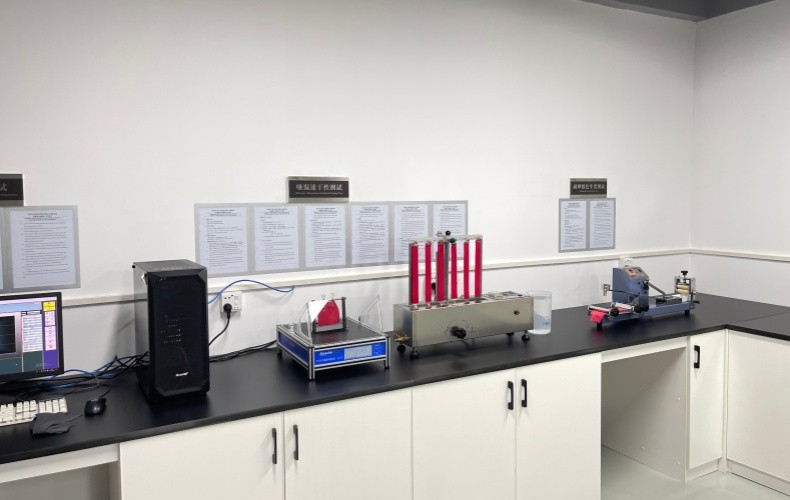
Two factories in Guangxi and Dongguan, 20,000㎡ combined, 500,000 pieces monthly capacity, making streetwear and light outdoor clothing (outdoor clothing) on OEM / ODM terms since 2014, for 1,200+ brands. The fabric lab runs GSM, pilling, and shrinkage testing; garment QC follows AQL 1.5 plus an 8-step process; certified BSCI (Grade B), GRS, ISO 9001, OEKO-TEX Standard 100. Port of shipment: Shenzhen (FOB Shenzhen).
Ready to lock the fabric structure for your hoodie or light outdoor line? Send us the wear scenario, target temperature, and desired hand-feel, and we return a transparent fabric plan and sampling timeline — terry or fleece, what GSM, whether to zone-mix — all explained before we start, and 100 pieces gets the new structure running steadily.